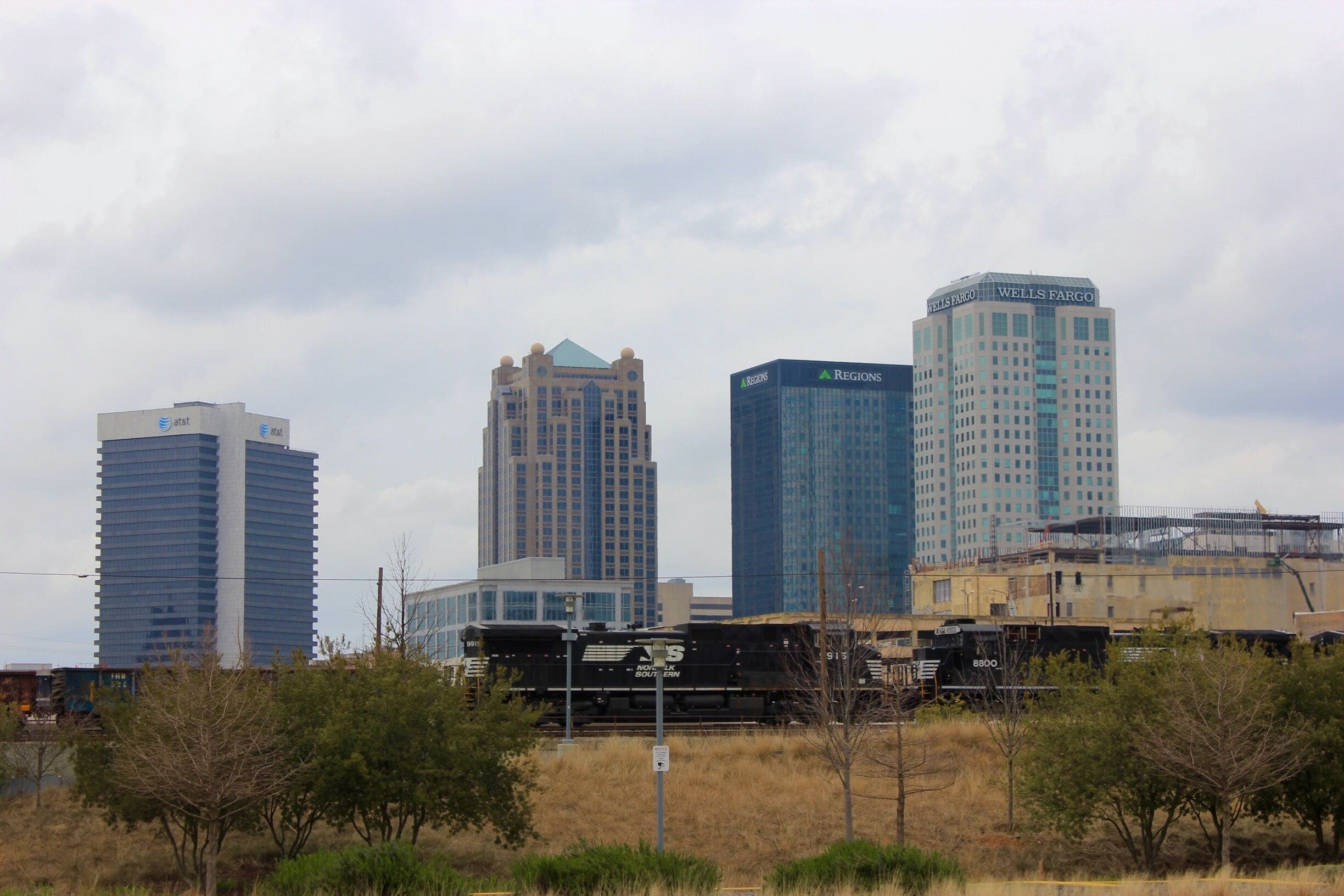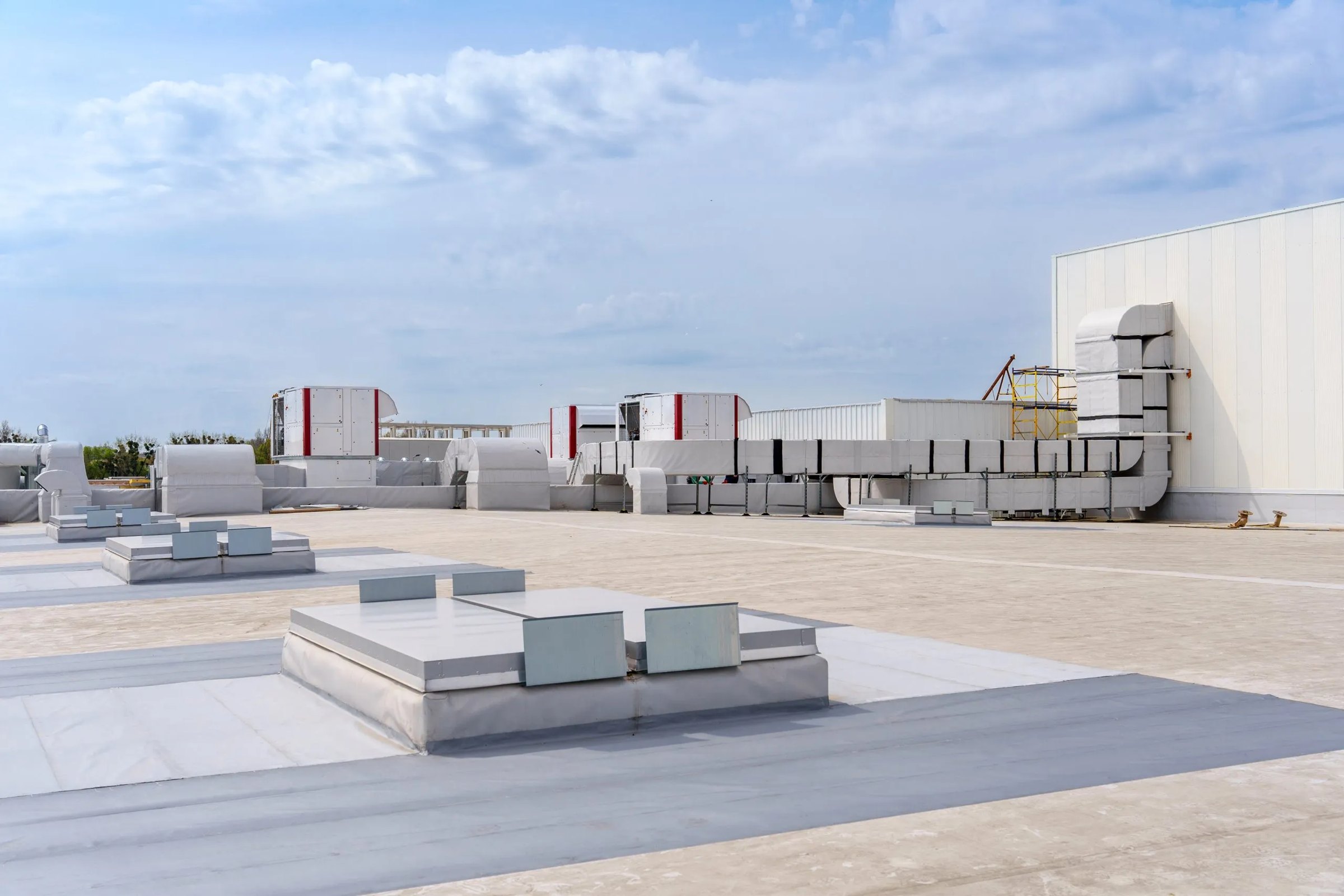
Industrial Roofing for manufacturing facilities, warehouses, and industrial buildings throughout Birmingham area. The work is planned around roof access, active building use, drainage, membrane condition, and the owner's timeline for repair, maintenance, or capital work.
Questions Owners Ask
How do ice storms affect industrial roofs differently than normal rain or snow in Birmingham?
Ice loading is substantially heavier than equivalent depths of snow — ice weighs approximately 57 pounds per cubic foot, compared to 20 pounds for wet snow and less than that for dry snow. A two-inch ice accumulation across a large industrial flat roof can add loading that tests structural capacity, particularly on older industrial buildings with framing sized to older load standards. Beyond structural loading, ice creates insidious infiltration risk: as ice melts and refreezes at the edges of the roof, it can force water under membrane and flashing terminations in ways that normal rain doesn't. After any significant ice event in Birmingham, we recommend a post-storm inspection of commercial and industrial roofs to check flashing conditions and identify any areas where ice melt found a path into the building system.
We're re-roofing an automotive supplier plant. What should we know about vapor management on manufacturing buildings?
Vapor management is critical on manufacturing buildings and frequently mishandled. The principle is straightforward: you want to prevent warm, humid interior air from reaching the cold underside of the roof deck during winter, where it would condense and cause corrosion and insulation saturation. The correct approach depends on your climate zone and building construction — in Birmingham's mixed climate, vapor retarder placement and R-value distribution through the insulation assembly need to be designed to keep the dew point within the insulation rather than at the deck. For manufacturing buildings with internal humidity sources — painting, washing, metalforming, or similar processes — vapor control is even more important. We design insulation assemblies for industrial manufacturing buildings with vapor management as a primary criterion, not an afterthought. If your current building has a moisture problem in the roof assembly, we can diagnose the cause and correct it as part of re-roofing.
What's the best roofing system for a large legacy steel manufacturing building in the Birmingham industrial corridor?
There's no single right answer without seeing the building, but we can outline the general decision framework. Legacy steel industrial buildings typically have structural metal deck over steel framing, and the deck condition is the first evaluation point — we inspect for corrosion, section loss, and attachment failures before recommending any system. If the deck is sound, the main choices are: a new metal panel system installed over the existing framing (best performance, most durable, but higher cost and structural assessment required), a single-ply membrane system over new insulation and cover board (good for deck-level re-roofing where metal re-roofing isn't justified), or a modified bitumen system for complex surfaces and penetration conditions. For very large buildings with limited capital budgets, we can sometimes phase the work — addressing the worst sections first while implementing a maintenance program for sections that have remaining life.
How often should an industrial facility in Birmingham get its roof inspected?
Twice a year minimum — fall before the first cold weather event and spring after the risk of ice has passed. Birmingham's intermittent ice events make the fall inspection timing particularly important, because you want all flashings, seams, and drainage systems in good condition before the first significant cold event. For buildings with active manufacturing operations, rooftop equipment service traffic, or known drainage challenges, quarterly inspections are worthwhile. We provide written inspection reports with photographs on every inspection, which gives you a documented condition history that supports both maintenance decision-making and insurance documentation. For industrial buildings that are part of a financed portfolio or corporate real estate program, inspection documentation is often a lender or management requirement that inspection programs satisfy.
We have standing water on our industrial roof after every rain event. Is that a serious problem?
Yes — chronic ponding on industrial flat roofs is a serious problem that accelerates roof system failure in several ways. Standing water adds sustained dead load to the roof structure, which over time causes deck deflection that creates more ponding, which adds more load — a self-reinforcing cycle. Ponding also accelerates membrane degradation through sustained UV exposure at the water's edge, chemical concentration from evaporation, and the freeze-thaw damage that occurs when standing water freezes in winter. Organic growth in ponding areas further degrades membrane surfaces and clogs drains. The solution depends on the root cause: inadequate drain capacity, insufficient roof slope, drain locations that don't correspond to the low points in the deck, or structural deflection that's created low spots. We diagnose the specific cause and address it as part of a roofing project rather than just installing new membrane over the existing drainage problem.
Frequently asked questions
Is built-up roofing still installed on new Birmingham commercial buildings?
Yes, though it is less common than TPO or EPDM for most new commercial construction. BUR is specified on buildings that need heavy foot traffic tolerance, chemical resistance, or where the building owner has a specific preference for the redundant ply system. We install new BUR on appropriate Birmingham commercial projects — industrial buildings near BHM airport, chemical storage and processing facilities, and specialized institutional buildings where the multi-ply redundancy justifies the additional installation cost.
How do I know if my existing Birmingham BUR roof can be recovered or needs replacement?
Moisture core testing is the only reliable answer. We pull cores in a grid pattern — minimum five locations per 10,000 sq ft — and cut them open to assess insulation moisture content. If insulation is dry, ply adhesion is intact, and the deck shows no deterioration, a recover is on the table. If cores show wet insulation or delaminated plies, tear-off is the correct scope. We deliver the core results in a written report with photographs — not a verbal recommendation on the job site.
How does Birmingham's spring hail season affect BUR?
Aggregate-surfaced BUR handles hail better than single-ply membranes — the aggregate dissipates impact energy across multiple plies rather than concentrating it at a single membrane layer. However, hail impact can displace or fracture aggregate and crack hardened bitumen flashings at penetrations. After any Jefferson County hail event of 1.5 inches or larger, we recommend a post-storm inspection to document flashing and aggregate condition before water intrusion develops.
What does BUR tear-off and replacement cost compared to TPO on a Birmingham building?
BUR tear-off typically runs higher than TPO tear-off because of the weight and adhesion of the multi-ply system — more labor to remove, heavier loads to haul. New BUR installation cost is also higher than TPO on a per-square basis. The lifecycle comparison depends on the specific building and capital horizon. We produce detailed scope comparisons — BUR versus TPO versus modified bitumen — for any Birmingham building where the system choice is not predetermined by the existing deck or structural constraints.