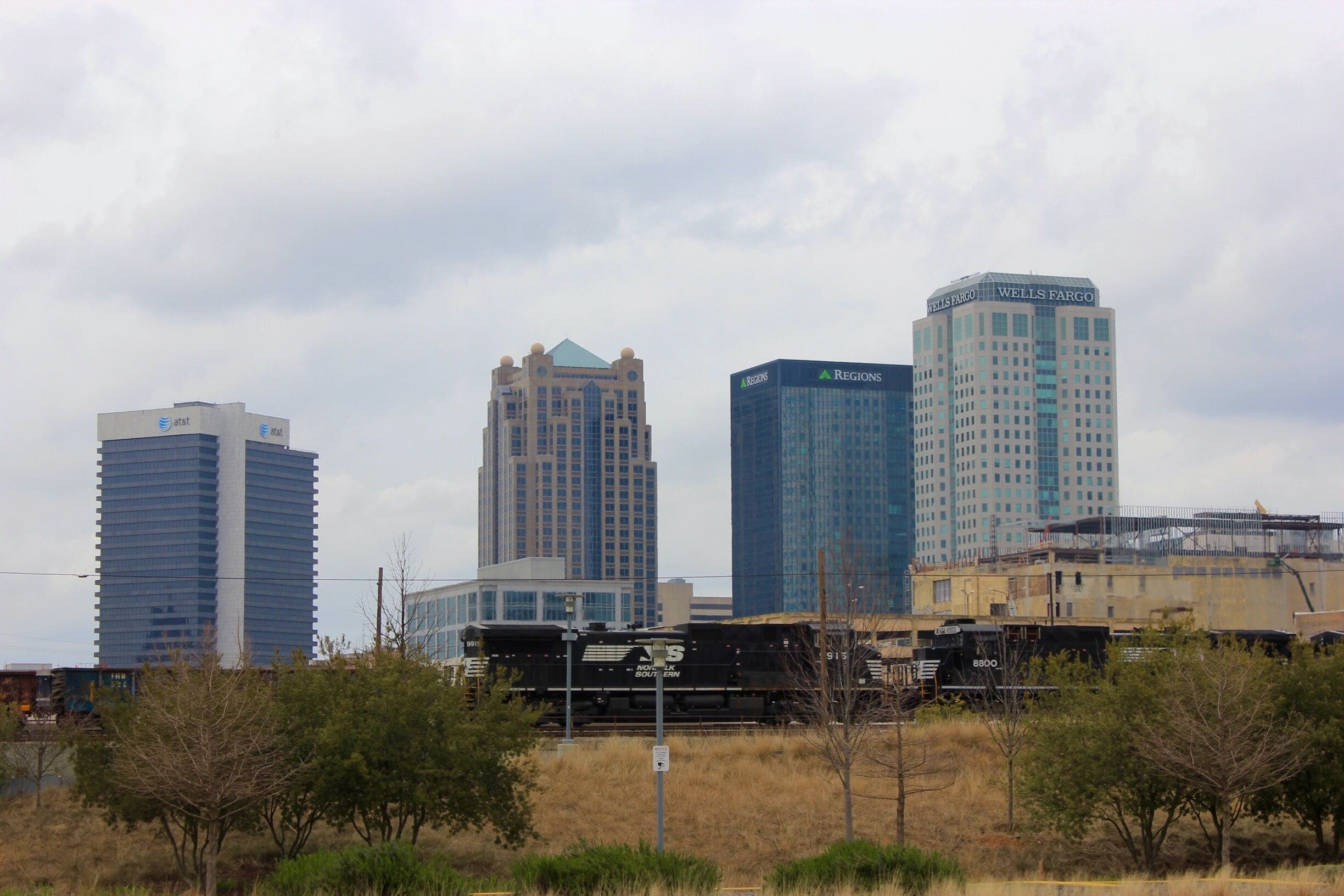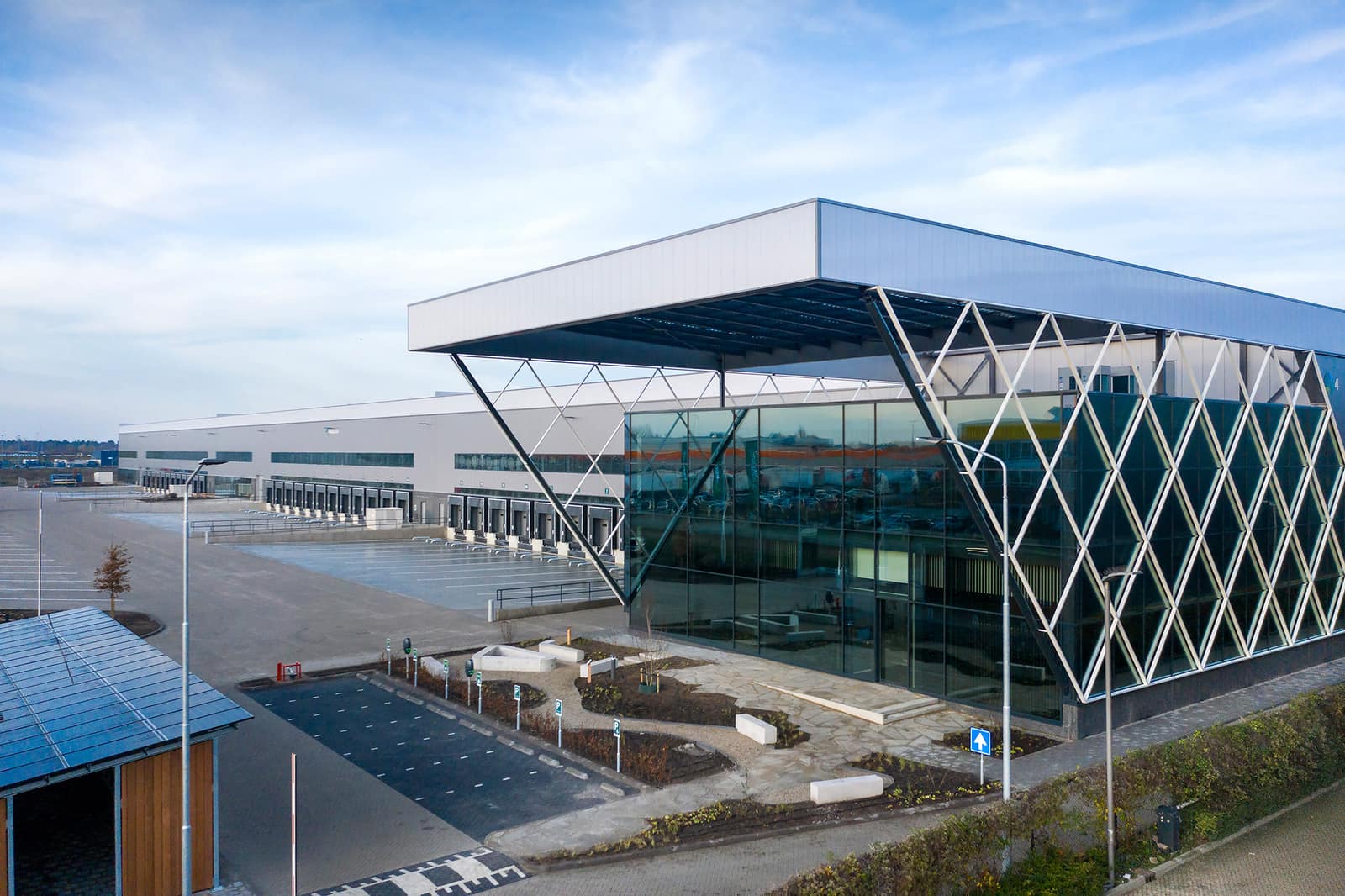
Commercial roofing for Birmingham-area distribution and logistics facilities along I-20, I-65, and I-59 - Norfolk Southern intermodal, Trussville and Clay industrial parks - with 24/7 operations sequencing and dock coordination. We shape roof recommendations around access limitations, equipment exposure, scheduling windows, and the records the ownership team needs.
Production Sequencing Around Active Logistics Operations
We request the facility's dock and shift schedule before finalizing the production sequence on any active Birmingham distribution building. Tear-off debris staging is planned against the dock layout so that active doors are never blocked during high-volume shift windows. Material deliveries — insulation, membrane rolls, equipment — are scheduled during low-dock-activity periods, typically mid-morning or early afternoon when inbound and outbound freight volumes are lowest.
Norfolk Southern intermodal operations and the trucking facilities that interface with the rail yard create additional scheduling constraints along the eastern Jefferson County freight corridors. Buildings adjacent to active intermodal operations have tight vehicle circulation requirements at all times. We conduct a pre-construction site walk specifically to map vehicle flow patterns, identify staging zones that do not conflict with carrier traffic, and confirm our material lift points with the facility's operations manager before mobilization.
For facilities running 24-hour operations, we schedule tear-off and the noisiest production activities during the day shift when communication with operations staff is easiest, and use the overnight window for membrane installation and detail work that can proceed without heavy equipment. Same-day dry-in on every section is non-negotiable — a 400,000 square foot distribution center with inventory on the floor cannot absorb a water event because we left the deck exposed overnight.
Roof Systems for Birmingham Logistics Buildings
Modified bitumen is the dominant original system on Birmingham distribution buildings constructed before 2000, and much of the Trussville and eastern Jefferson County industrial inventory is running modified bitumen systems that are 20 to 30 years into their service life. The common failure modes are granule loss and surface cracking from UV degradation, seam delamination at cap sheet laps, and flashing failure at equipment curbs and wall terminations. We assess recover-versus-replace on every modified bitumen building we inspect based on membrane thickness remaining, insulation saturation percentage, and deck condition.
EPDM 60-mil is the standard specification for Birmingham logistics buildings that need a single-ply system — it handles the thermal cycling that metal-deck buildings experience more aggressively than masonry or concrete structures, it is cost-effective on large roof areas, and it carries a 20-year manufacturer warranty path. For facilities in the Jefferson County hail corridor, we specify HD cover board under the EPDM to improve impact resistance and document the impact rating for insurance purposes.
TPO is appropriate for newer Birmingham logistics buildings, particularly those with energy efficiency requirements built into lease terms or those where the reflective surface meaningfully reduces cooling load on the facility's HVAC system. In a distribution building with minimal climate control, the energy benefit of TPO versus EPDM may be secondary — we specify based on the building's actual use profile and the owner's capital horizon.
Birmingham Climate Considerations for Logistics Roofs
Jefferson County sits in Alabama's spring hail corridor, and the large unobstructed roof surfaces of distribution buildings absorb hail impact without the benefit of parapet protection or mechanical equipment that breaks up the impact zone. We have documented hail events producing 1.5-inch to 2.5-inch stones in the Birmingham metro in 2020, 2022, and 2024. Every EPDM and TPO system we install on a Birmingham logistics building uses HD cover board as the standard specification — not an upgrade — because the insurance documentation value alone justifies the cost.
Birmingham's freeze-thaw cycles affect distribution buildings differently than they affect masonry office buildings. Metal-deck structures expand and contract more aggressively with temperature change, which creates stress at every penetration flashing, every wall termination, and every seam that runs parallel to the deck's long dimension. We use pre-formed flexible pipe boots, three-course parapet flashings, and seam designs that account for deck movement on every metal-deck logistics building we roof in Jefferson County.
The tornado exposure documented by the April 2011 superoutbreak is particularly relevant for distribution buildings because their large roof surfaces and relatively low structural mass make them more vulnerable to uplift loads than heavier construction. Our fastener patterns for mechanically attached systems on Birmingham logistics buildings are designed against the documented worst-case wind exposure for Jefferson County, not the minimum code assumption.
Frequently asked questions
Can you reroof a Birmingham distribution center without shutting down operations?
Yes. We have reroofed active distribution facilities in Jefferson County without a production shutdown. It requires a detailed pre-construction We do not request operational shutdowns as a convenience — we build the production plan around the facility's schedule.
How do you handle tear-off debris on a distribution building with active dock doors?
We plan the debris staging zones before mobilization — not after we arrive on-site. Active dock doors are never blocked during production. Tear-off material is staged in designated areas identified in the pre-construction walk, and debris runs are scheduled to avoid conflict with inbound and outbound carrier windows. This is standard on every logistics project we run.
What roof system do you recommend for a Birmingham warehouse or distribution center?
For buildings with existing modified bitumen systems that have not failed systemically, a recover with new cap sheet or single-ply can extend the roof 15 to 20 years at lower capital cost than full replacement. For buildings at end of life or with wet insulation, we specify EPDM 60-mil or TPO 60-mil on new polyiso with HD cover board. The right answer depends on what the moisture cores and deck inspection show — we do not recommend a system before we know what is under the existing roof.
Do you cover the Trussville and eastern Jefferson County industrial corridor?
Yes. The Trussville industrial parks, the Clay and Pinson cluster, the Moody and Argo industrial buildings, and the distribution facilities along the rail corridors east of downtown Birmingham are all within our regular service area. We pull permits from the relevant jurisdiction — City of Trussville, Jefferson County, or the relevant municipality — before any replacement work begins.