Modified bitumen roofing for Birmingham downtown and mid-rise legacy buildings - torch-down and self-adhered systems, recover analysis, and honest guidance on when single-ply conversion is the better long-term scope for Jefferson County buildings. We compare the roof deck, insulation needs, slope, drainage behavior, equipment load, and expected traffic before recommending an assembly.
Torch-Down vs Self-Adhered Modified Bitumen
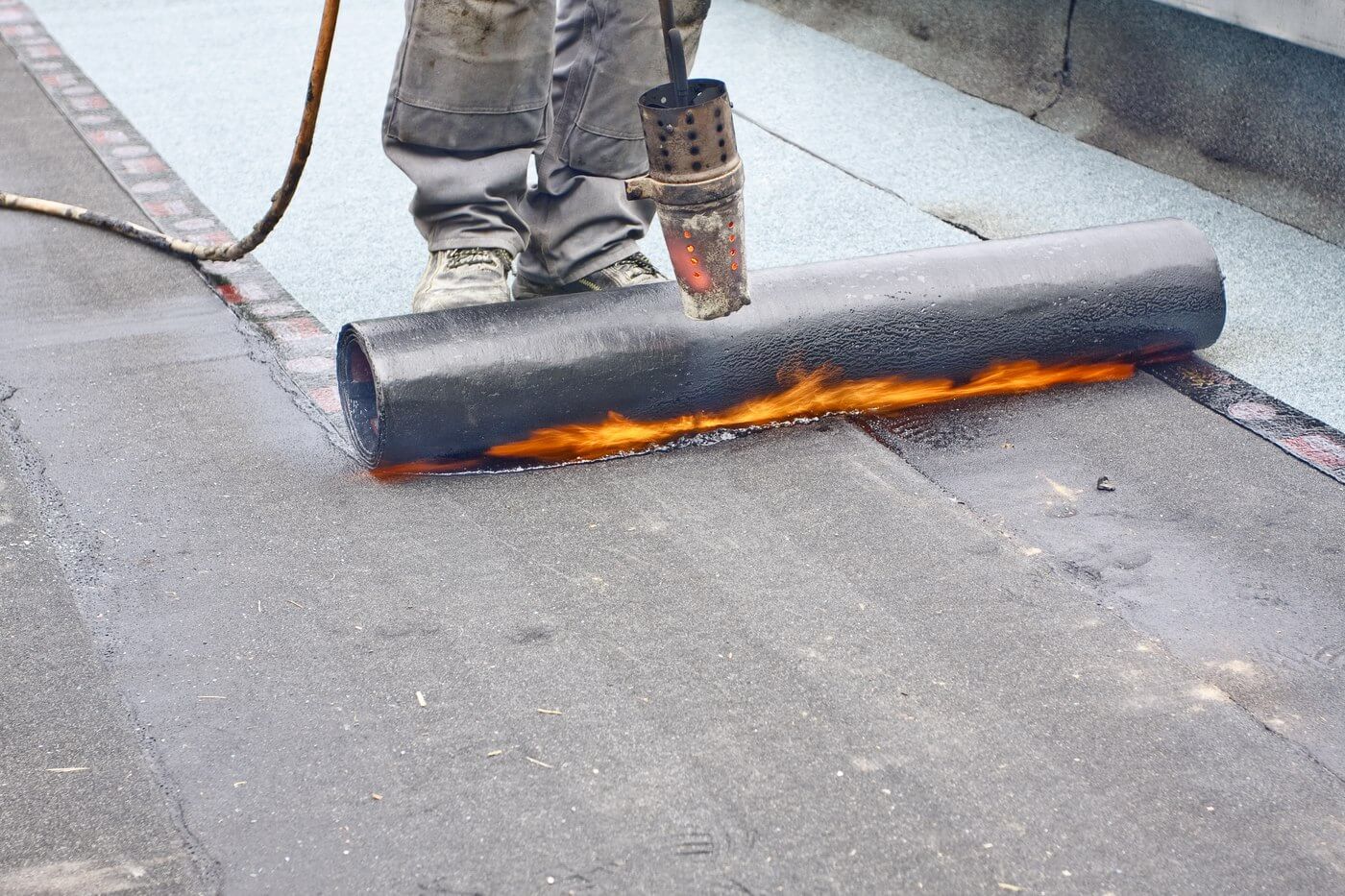
Torch-applied modified bitumen (torch-down) uses a propane torch to activate the bitumen underside of the cap sheet, bonding it to the base sheet or substrate below. It produces a robust, fully adhered installation and has been the dominant mod-bit application method in Birmingham commercial work for three decades. The limitation is open-flame risk — the City of Birmingham and most commercial insurance carriers require a fire watch protocol during torch work, and some occupied buildings prohibit open-flame application entirely. We file the required hot-work permits and maintain fire watch on every torch project as a standard scope item.
Self-adhered modified bitumen uses a factory-applied pressure-sensitive adhesive on the membrane underside — no open flame required. The system installs more slowly than torch-applied and demands careful surface preparation, because any contamination or surface moisture at the substrate will compromise the adhesive bond. We specify self-adhered systems on buildings where open flame is restricted (occupied medical buildings in the UAB Health System corridor, fully occupied multi-tenant commercial buildings, buildings with sensitive content directly below the roof work) and when ambient temperatures are reliably above 50°F for adhesion.
When Modified Bitumen Recover Makes Sense
Recover makes sense when: the existing mod-bit system's insulation reads dry on moisture core pulls, the deck is structurally sound, the parapet and flashing geometry does not require a full re-detail, the building owner has a 10 to 15-year capital horizon, and the project does not need to achieve current energy code R-value compliance. Buildings that receive a waiver from the tapered-insulation-to-slope requirement due to structural load constraints can often recover rather than replace even when the insulation stack is below current IECC minimums.
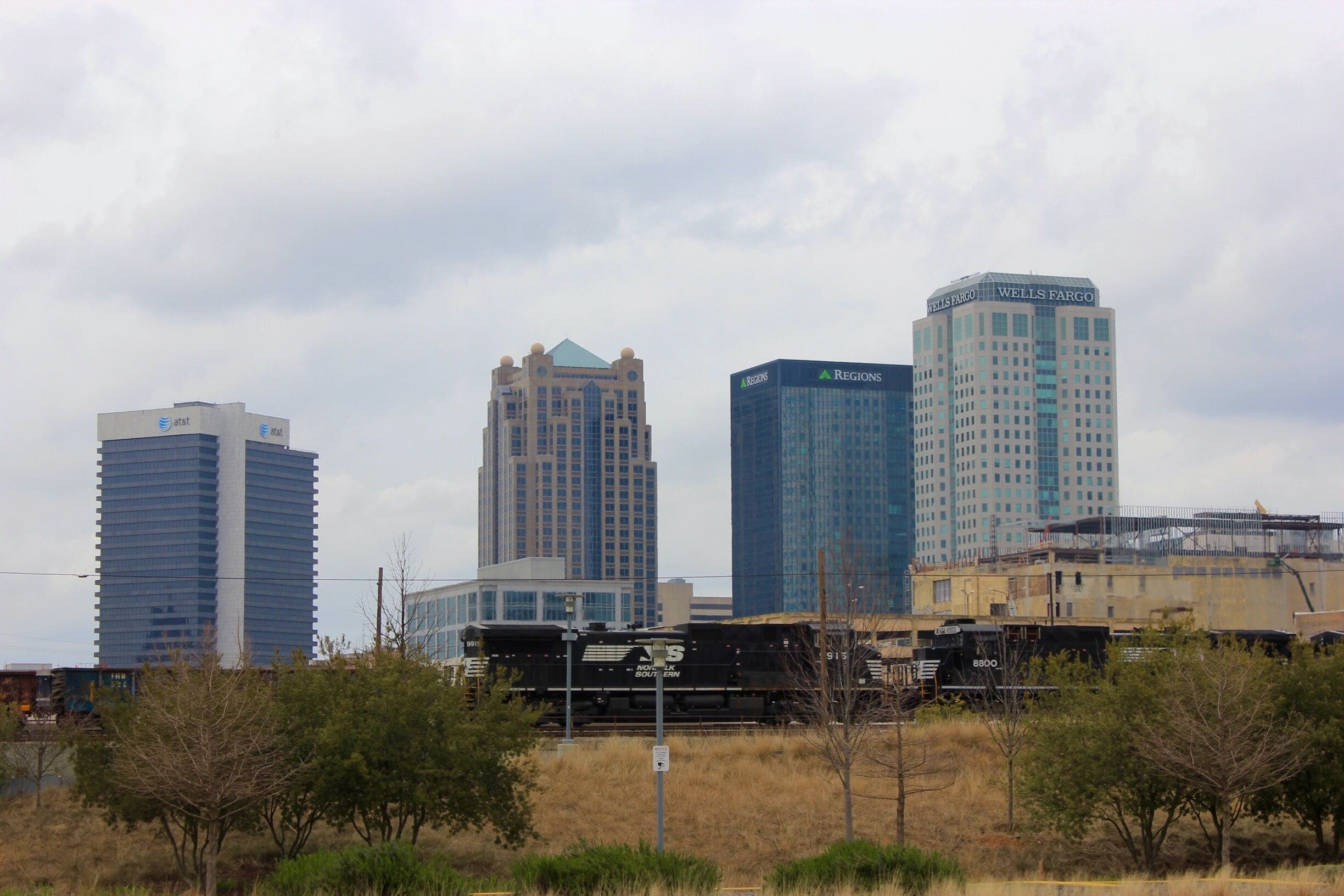
We see mod-bit recover work frequently on the older Class B office buildings in the downtown financial district and along the US-280 corridor — buildings in the eight to twenty-story range where the existing BUR base is sound, the insulation is dry, and the owner needs another 12 to 15 years of watertight performance without a full capital commitment. Modified bitumen cap sheet over the existing base, with new flashing details at parapets and penetrations, is often the right scope for these buildings.
When Single-Ply Conversion Is the Better Call
Single-ply conversion — replacing mod-bit with TPO or EPDM — is the better scope when: the existing insulation has wet sections requiring partial or full replacement anyway; the building's energy code compliance requires a new insulation stack to current IECC R-values; the owner wants a manufacturer NDL warranty that extends beyond what modified bitumen manufacturers offer; or the building is headed to market or refinancing within five years and requires current-system documentation.
The installed cost of a TPO replacement versus a mod-bit recover on a typical Birmingham Class B office building runs roughly 30 to 45 percent more for the full replacement. That premium buys a 20-year NDL warranty, a new insulation stack to current code, and a documented system that holds up in lender and buyer due diligence. For buildings with 15-year capital horizons in stable ownership, the recover math often wins. For buildings with near-term disposition events, the documentation premium is typically worth it.
Frequently asked questions
My 1995 Birmingham office building has original torch-down mod-bit. What are my options?
A 1995 torch-down system is approximately 30 years old — at or near end of serviceable life depending on maintenance history. We pull moisture cores at representative locations, inspect the parapet and penetration flashings, and assess overall system condition. If the insulation is dry and the deck is sound, recover with new mod-bit cap sheet or a thin-set single-ply recover is usually viable for another 10 to 12 years. If we find wet insulation or significant flashing failure at the parapets — a common finding on Birmingham buildings where ice events have stressed previously borderline flashings — replacement to current spec is the honest scope.
Are there hot-work restrictions for torch-down roofing in Birmingham?
Yes. The City of Birmingham Fire Prevention Division requires a designated fire watch during all open-flame roofing work and for 30 minutes after torch shutdown. Most large commercial buildings in the downtown financial core and the UAB Medical District corridor also require hot-work permits approved by the building's fire marshal. We file the required permits and maintain fire watch on all torch projects as a standard scope item — not an add-on.
Can modified bitumen qualify for a manufacturer warranty?
Yes. Major modified bitumen manufacturers — GAF, Soprema, IKO, Polyglass — offer manufacturer-backed warranties on qualifying mod-bit systems installed by credentialed applicators. Warranty terms typically run 10 to 20 years depending on the system and manufacturer. These warranties are narrower than TPO or EPDM NDL warranties in some conditions — review the specific exclusions before comparing warranty terms across system types.