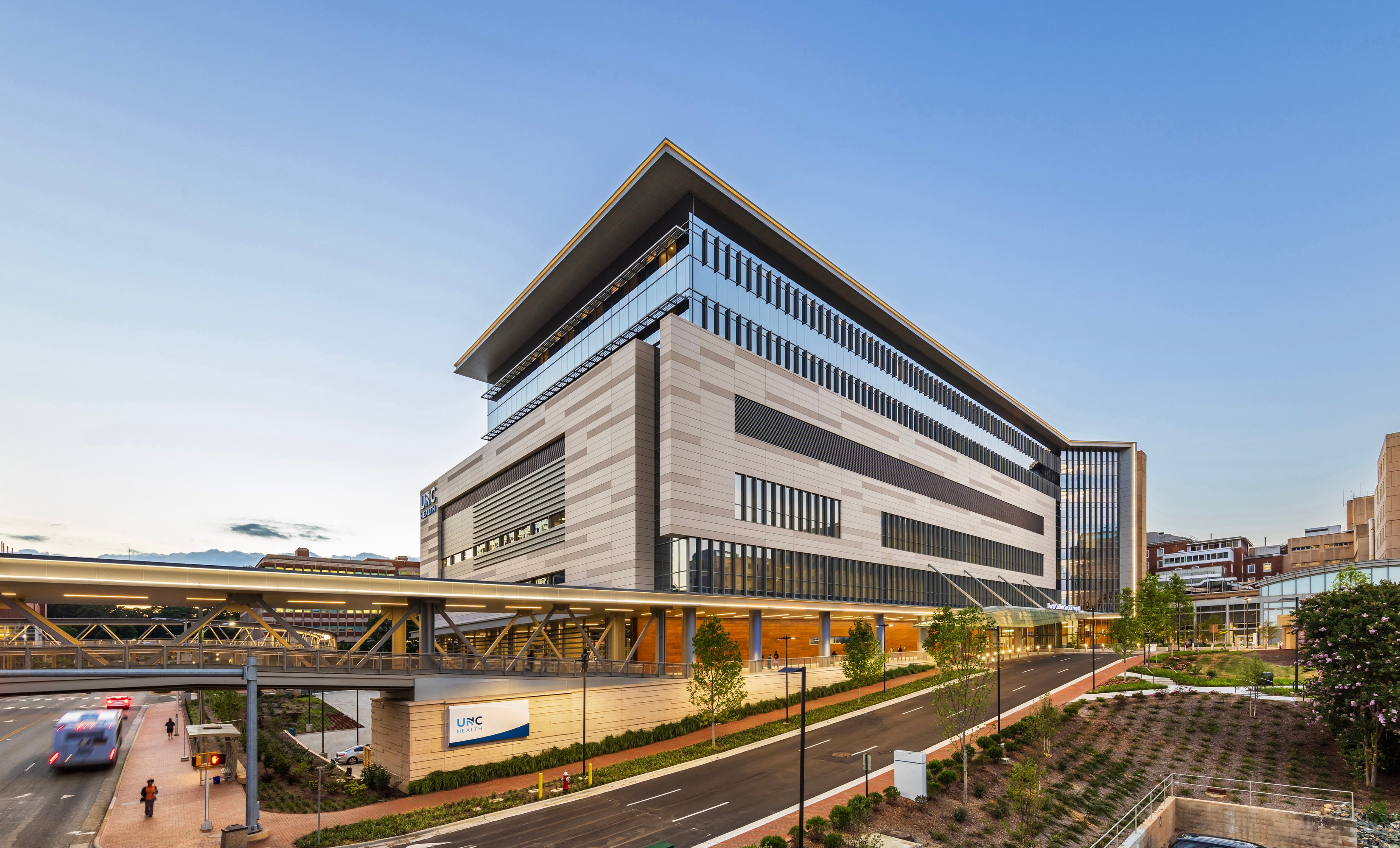
Commercial roofing for Birmingham hospitals and medical facilities - UAB Hospital, Children's of Alabama, St. Vincent's - with infection-control protocols, hot-work permit coordination, and rooftop equipment management. We shape roof recommendations around access limitations, equipment exposure, scheduling windows, and the records the ownership team needs.
Infection Control Risk Assessment on Hospital Roof Projects
The ICRA process defines what protective measures our crew must follow before a single fastener goes into the deck. For a reroof project above an occupied surgical or oncology floor at UAB Hospital, that means negative-pressure containment barriers at all roof access points, daily HEPA filter inspection logs, and crew decontamination protocol before re-entering the building. For a mechanical penthouse reroof above administrative space, the ICRA tier is lower but still requires documented dust and debris control that meets the facility's standards.
We designate an infection-control lead on every hospital project. That person attends the pre-construction ICRA meeting with the facility's infection-control officer, signs the hospital's contractor acknowledgment form, and is responsible for daily sign-off that containment measures are in place before production begins. At Children's of Alabama, where the patient population is entirely pediatric, infection-control requirements are applied at the most conservative tier regardless of the floor below — we build that assumption into the initial scope rather than negotiating it on-site.
St. Vincent's Birmingham operates under Ascension Healthcare's system-wide contractor compliance framework, which includes background verification, safety orientation, and documented infection-control training before any contractor crew sets foot on a clinical-area roof. We have completed this process and understand what the Ascension framework requires of outside contractors on occupied facility projects.
Rooftop Equipment Coordination on Birmingham Medical Campuses
UAB's medical district campus includes UAB Hospital, the UAB Callahan Eye Hospital, UAB Kirklin Clinic, and a network of research and education buildings that share interconnected rooftop mechanical systems. Fume exhaust stacks from research laboratory environments cannot be interrupted during production hours. We scope those projects with the facility's engineering director to identify which exhaust fans serve critical research or patient care areas, which can tolerate brief shutdown windows, and which must be worked around entirely.
Cooling towers on Birmingham hospital roofs run continuously during the summer, and with Jefferson County's heat and humidity, there is no shoulder season where a tower can be idled without consequence. We ask for access to the facility's maintenance schedule before finalizing the production sequence on any Birmingham hospital project. If a cooling tower is scheduled for its annual inspection in October or November, that is the window for working the base flashing and supply-line penetrations — we build the rest of the production sequence around that anchor.
Children's of Alabama occupies a large campus on 20th Street South adjacent to UAB's main hospital complex. Rooftop areas that overlie pediatric ICU and neonatal care floors require that heavy deck work — jackhammering, pneumatic fastening on structural substrates — be scheduled during the facility's lowest-census windows and pre-approved by the engineering team. We do not make production assumptions about vibration-sensitive areas; we document every one of them in pre-construction and schedule accordingly.
Membrane and System Selection for Healthcare Environments
TPO is the most common membrane on Birmingham hospital buildings constructed after 2000. It is thermally efficient, chemically inert to the range of exhaust emissions from medical facilities, and carries a 20-year NDL warranty path that aligns with hospital capital planning cycles. We install 60-mil or 80-mil TPO depending on the roof's mechanical traffic load — hospital roofs with quarterly HVAC maintenance visits need 80-mil and heavy-duty walkway pad systems on every identified equipment path.
Surgical exhaust fans, generator stacks, and laboratory fume exhaust create localized chemical exposure at the flashing line. Standard TPO flashing details hold up against incidental chemical contact, but penetrations that routinely run hot or chemically aggressive exhaust get PVC flashing material at that specific detail — PVC carries better chemical resistance than standard TPO at high-temperature flashing interfaces, and hospital environments produce more of those interfaces than almost any other building type.
Birmingham's older hospital construction — buildings from the 1960s and 1970s in the UAB Medical District and the original St. Vincent's campus — often runs original built-up roof systems that are 40 to 50 years into their service life. Full replacement is the appropriate scope for these; recovering a decades-old BUR system with a single-ply membrane will not produce a defensible result on a building subject to the structural movement and thermal cycling of an active medical campus.
Frequently asked questions
Do you have experience with Joint Commission construction requirements for hospital roofing in Birmingham?
Yes. We have completed hospital projects under Joint Commission accreditation frameworks on Birmingham campuses. We understand the ICRA tier system, the Environment of Care construction documentation requirements, and how to interface with a hospital's safety officer and infection-control officer before and during production. UAB Health System, Ascension St. Vincent's, and Children's of Alabama each run different contractor compliance frameworks — we have worked within all three.
Can you work on an occupied hospital in Birmingham without interrupting patient care?
That is the baseline expectation for every hospital project we run. We do not interrupt patient care areas, we do not trigger HVAC contamination events, and we do not create vibration or noise events that have not been pre-approved by the facility's engineering team. If a scope element requires an operational interruption, we identify it in pre-construction and schedule it during the facility's approved window.
How do you handle hot-work permits on Birmingham medical campuses?
UAB Health System, Children's of Alabama, and St. Vincent's each maintain their own hot-work permit process and approval chains. Our foremen know the process at each campus we work on. We do not begin any torch work, heat welding, or grinder operation without a signed hot-work permit from the facility's fire safety officer for that specific day and location — no exceptions.
What is your emergency response time for a roof leak at a Birmingham hospital?
For UAB Medical District and Children's of Alabama, emergency dry-in response is within two to three hours. For St. Vincent's on Lakeshore and the US-280 medical corridor buildings, it is three to four hours. We maintain standing emergency contact protocols with the facility managers at the Birmingham medical campuses we service. After-hours calls reach our project manager on duty directly.