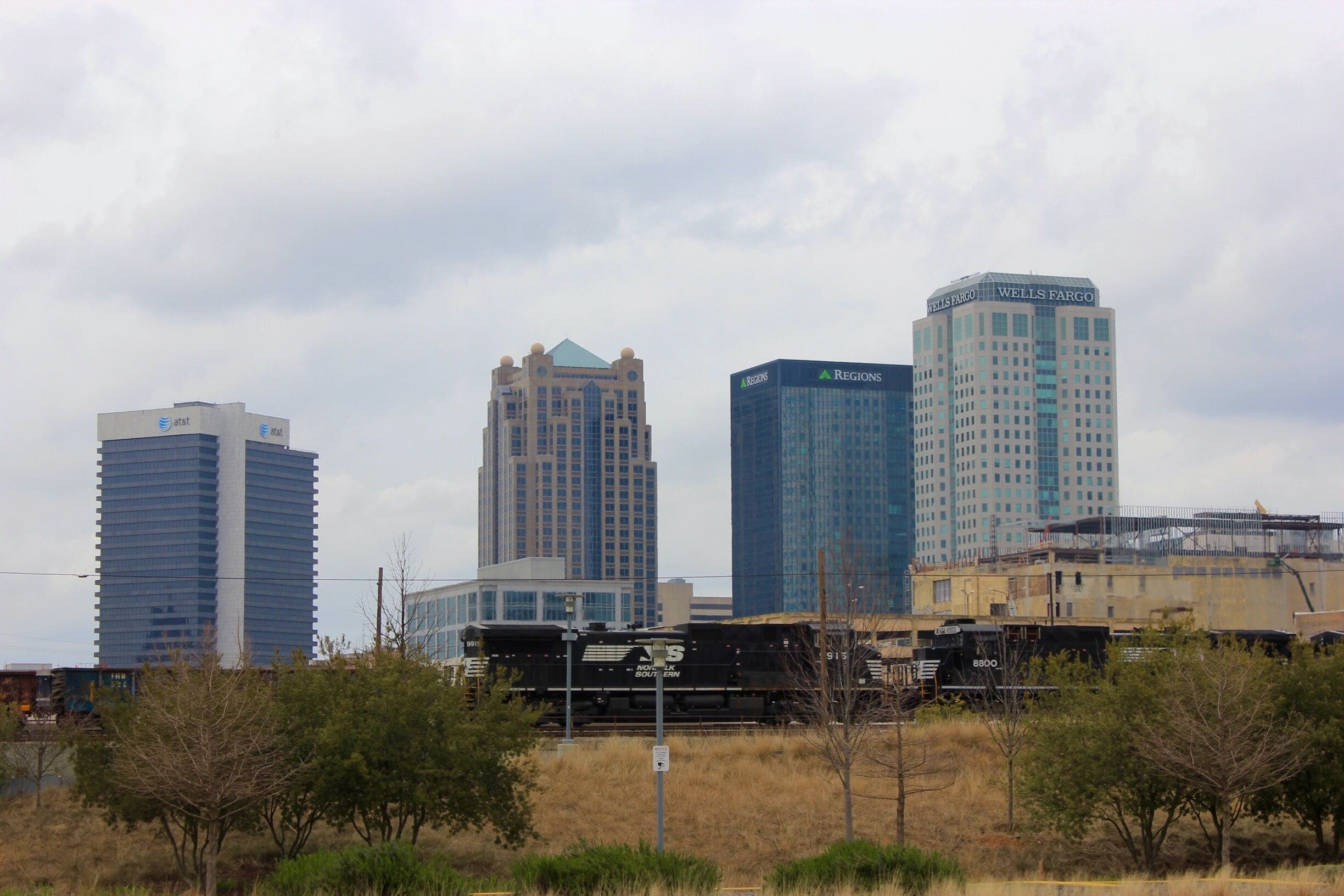
Commercial roof asset management for Birmingham multi-property portfolios - recurring inspection, condition tracking, warranty maintenance coordination, and capital planning across the full Jefferson County commercial inventory. The work is planned around roof access, active building use, drainage, membrane condition, and the owner's timeline for repair, maintenance, or capital work.
What the Program Covers
Recurring inspection: We walk every roof in the program on a defined annual or semi-annual cadence. Each inspection produces a written condition report with photo log, zone diagram, and condition score for every roof section, flashing transition, drain, and penetration. Condition scores are tracked over time — our program database carries the condition history for every roof we manage, which means we can show the building owner how the roof has changed since the last inspection rather than just describing current state.
Manufacturer warranty maintenance: Manufacturer NDL warranties on TPO, EPDM, and modified bitumen systems require documented annual inspection and maintenance to remain active. We perform the required inspection, document the maintenance performed, and deliver the manufacturer's required maintenance report to the warranty desk on the building owner's behalf. Roofs in our program do not lose their warranties because the maintenance documentation lapsed.
Post-storm assessment: After any hail event of 1.5 inches or larger in Jefferson County, or any tornado or high-wind event producing documented damage in the building's area, we mobilize a post-storm inspection within 72 hours for all program buildings in the affected area. The inspection produces a written damage assessment that distinguishes pre-existing condition from event-related damage — the document format is usable by property adjusters and insurance engineers without translation.
Repair coordination: Identified repairs from condition inspections or post-storm assessments are prioritized, scoped, and coordinated through our project management process. We manage the repair as part of the program — the building owner does not need to source a separate contractor for items our inspections identify. Emergency repairs on program buildings receive same-day response during business hours and next-business-day response outside hours.
Capital Planning Integration
The inspection database drives capital planning. We produce an annual capital forecast for every portfolio in the program — a multi-year projection of anticipated replacement and major repair capital requirements, with the condition data and remaining-life estimates that support the projections. The format is built to integrate with property management software and REIT reporting cycles: line-item costs by building, anticipated timing by fiscal year, condition data that supports the reserve fund calculation.
For Birmingham building owners in active disposition cycles, we provide condition reports and capital estimates timed to the transaction timeline — the same data that goes into annual capital planning can support a buy-side due diligence process, a refinance reserve study, or a CMBS loan origination. We have produced condition reports on Birmingham commercial properties for all of these purposes and understand the format requirements for each.
Capital planning also covers the warranty expiration schedule. Every roof in the program has a tracked warranty expiration date. Three years before a warranty expires, we begin the recover-vs-replace analysis cycle so the capital decision is made on a planned timeline rather than under the pressure of an expiring warranty with no budget allocation.
Program Structure and Reporting
The program is structured as an annual retainer that covers the inspection cadence, condition reporting, warranty maintenance documentation, and post-storm response for a defined building list. Emergency repair response and planned repair work are quoted separately under the program's established fee structure — the building owner is not surprised by scope creep or change orders because the program agreement defines what is included in the retainer and what is billed separately.
Reporting is quarterly for active program buildings: a condition summary for all buildings inspected in the quarter, a capital forecast update reflecting any condition changes since the prior report, and a warranty maintenance status update. Annual reporting produces the full capital planning document and the condition-scored inventory for the full portfolio.
We run program buildings in Birmingham across every commercial corridor: the Downtown 20th Street financial core, UAB Medical District, Avondale and Lakeview redevelopment, the I-65 Hoover and Pelham corridor, the US-280 Mountain Brook and Vestavia Hills suburban belt, and the BHM airport-adjacent industrial cluster. A portfolio that spans these corridors gets a single consistent inspection standard and reporting format regardless of jurisdiction.
Frequently asked questions
How many buildings does a portfolio need to justify the asset management program?
We run the program for portfolios as small as three buildings. The fixed inspection and reporting infrastructure scales efficiently, and even a three-building portfolio benefits significantly from the capital forecasting and warranty maintenance tracking that the program provides. The per-building cost decreases as portfolio size increases — a 20-building portfolio pays meaningfully less per building than a three-building portfolio.
Can you add a building that another contractor installed to the program?
Yes. We assess the existing condition and warranty status of any building we add to the program, regardless of who installed it. If the roof is in the manufacturer's warranty period, we coordinate the warranty maintenance documentation with the manufacturer's warranty desk — most manufacturers allow transfer of warranty maintenance responsibility to a new contractor when the maintenance meets the manufacturer's standard. If the warranty has lapsed, we document the current condition and build a renewed maintenance program from that baseline.
What happens to program buildings after the April hail season in Jefferson County?
Post-storm inspection is triggered automatically for all program buildings in any Jefferson County zip code where a documented hail event of 1.5 inches or larger is recorded by our weather monitoring service. We do not wait for the building owner to call — the inspection is initiated by us within 72 hours of the event confirmation. The written damage assessment is delivered within five business days of the inspection.
Does the program include emergency leak response?
Yes. Program buildings receive same-day mobilization for reported emergency leaks during business hours, and next-business-day response outside hours. After-hours and weekend response is available at a defined premium rate that is disclosed in the program agreement, not invoiced as a surprise. For buildings on full-service program tiers, after-hours response is included in the retainer.