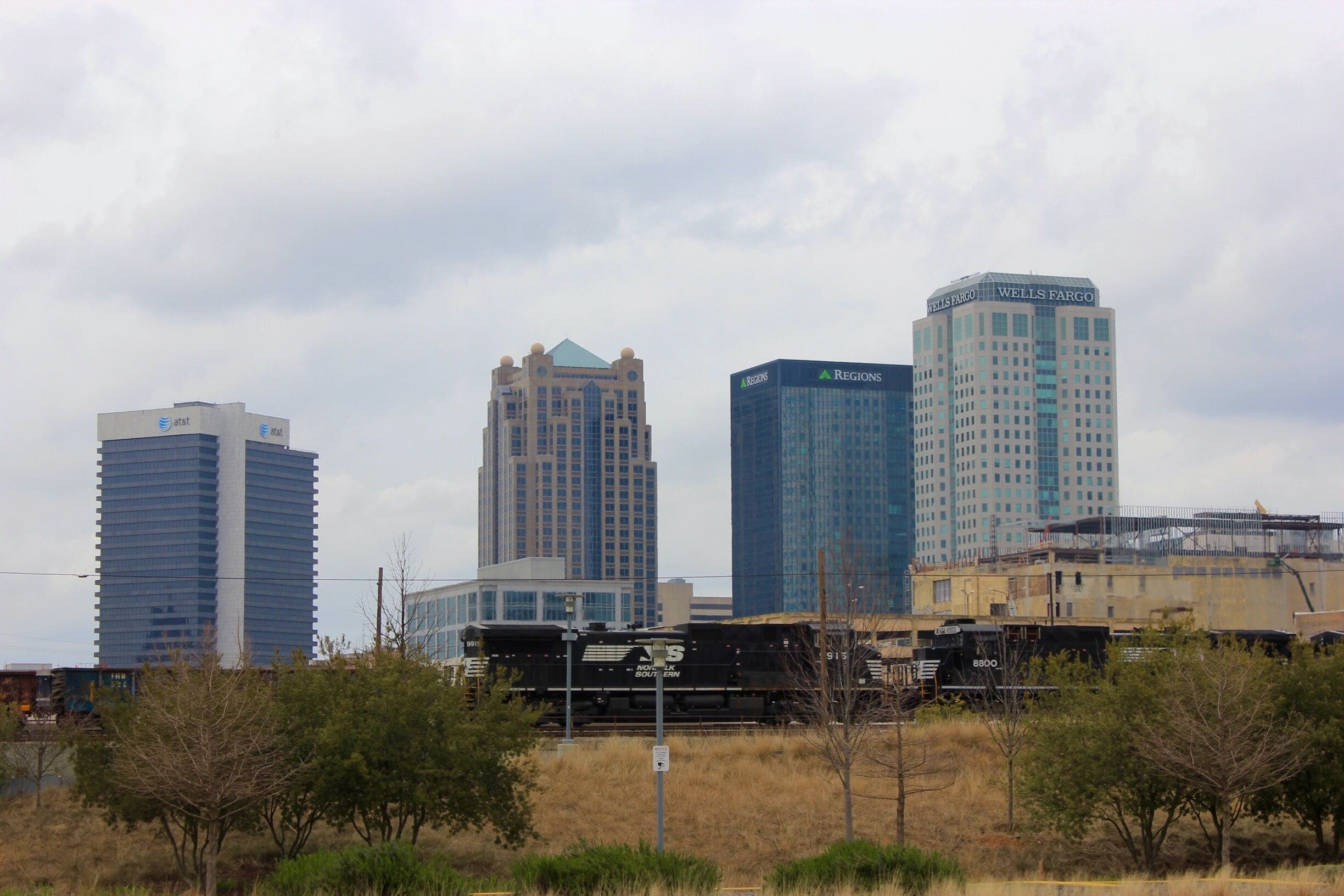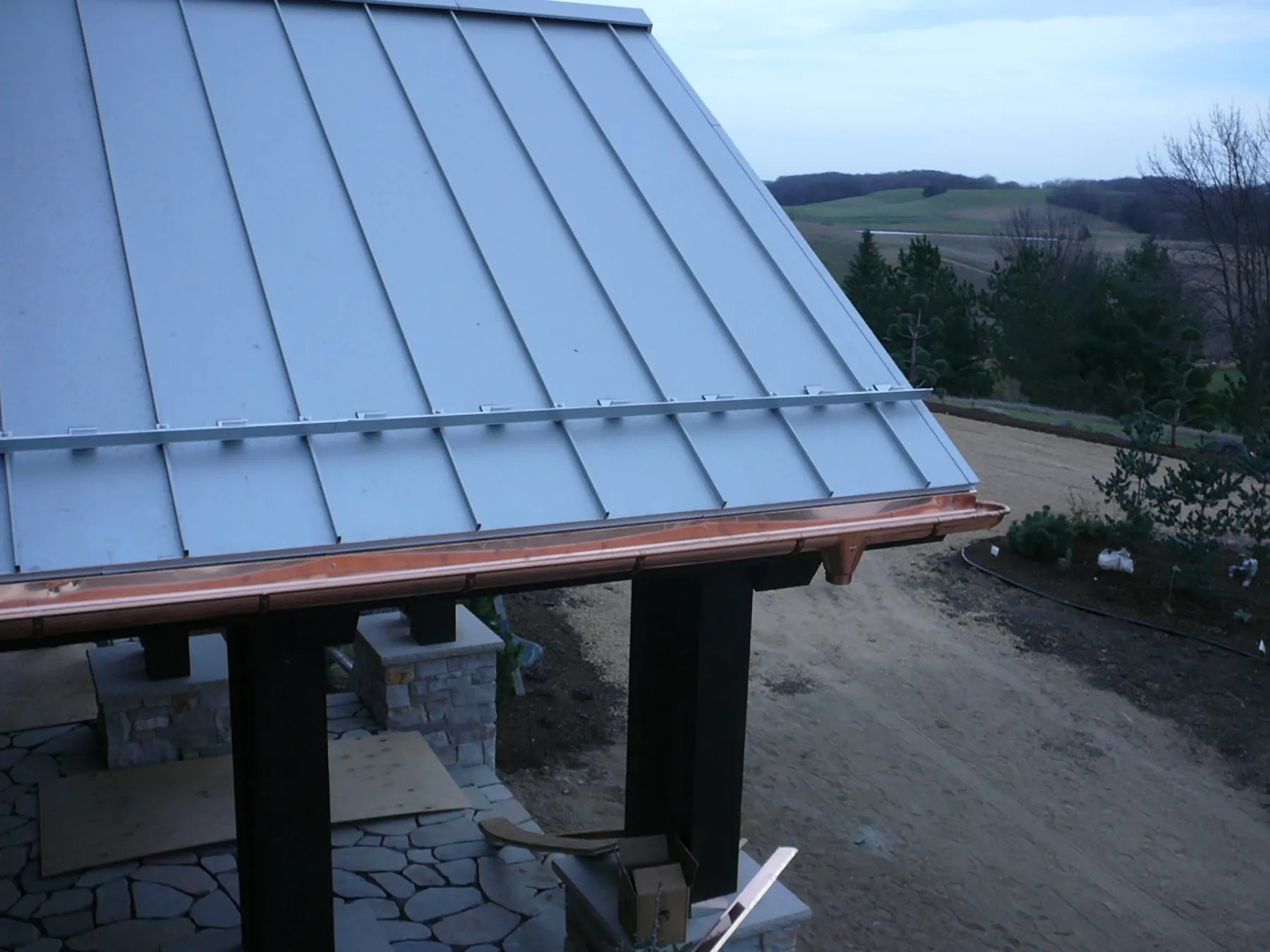
Standing seam metal roof installation for Birmingham commercial buildings - religious facilities, schools, Avondale and Lakeview redevelopment projects, and institutional buildings across Jefferson and Shelby counties. We compare the roof deck, insulation needs, slope, drainage behavior, equipment load, and expected traffic before recommending an assembly.
Galvalume vs Kynar-Painted Panel Systems
Galvalume (aluminum-zinc alloy coated steel) is the base specification for standing seam metal on Birmingham commercial applications. The zinc-aluminum alloy coating provides corrosion resistance that significantly outperforms plain galvanized steel in Alabama's high-humidity climate, and the natural metallic finish weathers predictably without requiring paint maintenance. For utilitarian applications — school gymnasium roofs, warehouse sections, equipment screen enclosures — bare Galvalume is typically the right specification. Properly installed Galvalume in Birmingham's climate zone delivers 40 to 50 years of service life.
Kynar 500 (PVDF) painted systems add color and a second corrosion-resistance layer. Kynar 500 is the coating specification required for 40-year finish warranties from most panel manufacturers — the fluoropolymer chemistry resists chalking and color shift in Birmingham's combination of high UV, high humidity, and gulf-system rain events better than polyester-based coatings, which typically fade visibly within 8 to 12 years. For the Avondale and Lakeview redevelopment projects where the roof is visible from street level and the color choice is part of the design intent, Kynar-painted panels are standard.
Standing Seam Systems for Religious Facilities in Birmingham
Religious facilities — churches, mosques, synagogues — represent the single largest category of standing seam metal work in the Birmingham metro. The combination of long building-use horizon, architectural emphasis, and the visibility that congregations bring to building maintenance decisions makes standing seam the natural specification. We have installed standing seam systems on congregations ranging from smaller neighborhood churches in the Ensley and West Birmingham corridors to large multi-building campus facilities in Vestavia Hills, Mountain Brook, and the eastern Shelby County growth areas.
Religious facility projects involve decision-making processes that differ from purely commercial work: building committees, extended timeline for scope approval, detailed attention to ridge cap treatment, eave termination, penetration aesthetics, and color selection. We produce the visual mock-ups, material samples, and manufacturer product sheets that these committees need to make informed decisions. We are accustomed to the longer approval cycle and build it into our project scheduling.
Installation Discipline on Standing Seam Systems
Standing seam metal requires installation discipline that differs fundamentally from membrane work. Panel flatness, consistent seam height, thermal-movement clip engagement, and penetration flashing geometry all require precision that is more demanding than rolling out TPO and welding seams. We use manufacturer-trained installation crews on all standing seam projects and submit shop drawings for review before panel production begins.
Thermal movement is the critical detail that distinguishes standing seam performance from membrane performance over time. A 100-foot run of Galvalume panel will expand and contract more than an inch across Birmingham's seasonal temperature range — from winter freeze events to August rooftop temperatures. The floating clip system that attaches the panel to the structure must accommodate that movement without restraint. Any attachment point that restricts thermal movement produces oil-canning, seam fatigue, or clip pull-out. We engineer the clip spacing and panel attachment against the calculated thermal movement envelope for each project.
Frequently asked questions
How much more does standing seam metal cost than TPO on a Birmingham commercial building?
Installed cost for standing seam Galvalume or Kynar-painted metal runs roughly two to three times the installed cost of 60-mil TPO on the same building. For a 10,000 square foot roof, that delta is significant in absolute dollars. The payback is a 40 to 50-year system with no re-roofing cycles during that period, minimal maintenance cost, and no warranty maintenance-contract obligation. For buildings with 30-plus-year ownership horizons — which describes most religious facilities and institutional buildings in the metro — the lifecycle math often favors metal. We run the lifecycle cost comparison for every project where the decision is close.
Do standing seam metal roofs work on low slopes?
Standing seam can be installed on slopes as low as 1:12 with a sealed seam profile. Some manufacturers' systems accommodate lower slopes, but we recommend against anything below 1:12 for Birmingham conditions because of the high-intensity rainfall from gulf-system storm events — ponding risk on very low slopes exceeds what seam sealant can reliably exclude over a multi-decade system life. We verify the structural slope at inspection before specifying a panel profile.
Can you install standing seam over an existing membrane roof?
Yes, in many cases. Standing seam installed over an existing membrane on a raised sub-framing system eliminates tear-off cost and provides additional insulation space. We assess the structural capacity first — the added dead load of the sub-framing and metal panel must be within the building's structural tolerance. When the structure supports it, this approach is cost-effective and avoids the disruption of full tear-off on occupied buildings.