Cool roof systems for Birmingham commercial buildings - white TPO and EPDM membranes, reflective silicone coatings, Alabama IECC 2021 climate zone 3A compliance, and documented HVAC load reduction for Jefferson County buildings. We compare the roof deck, insulation needs, slope, drainage behavior, equipment load, and expected traffic before recommending an assembly.
White Membrane Systems — TPO, EPDM, and PVC
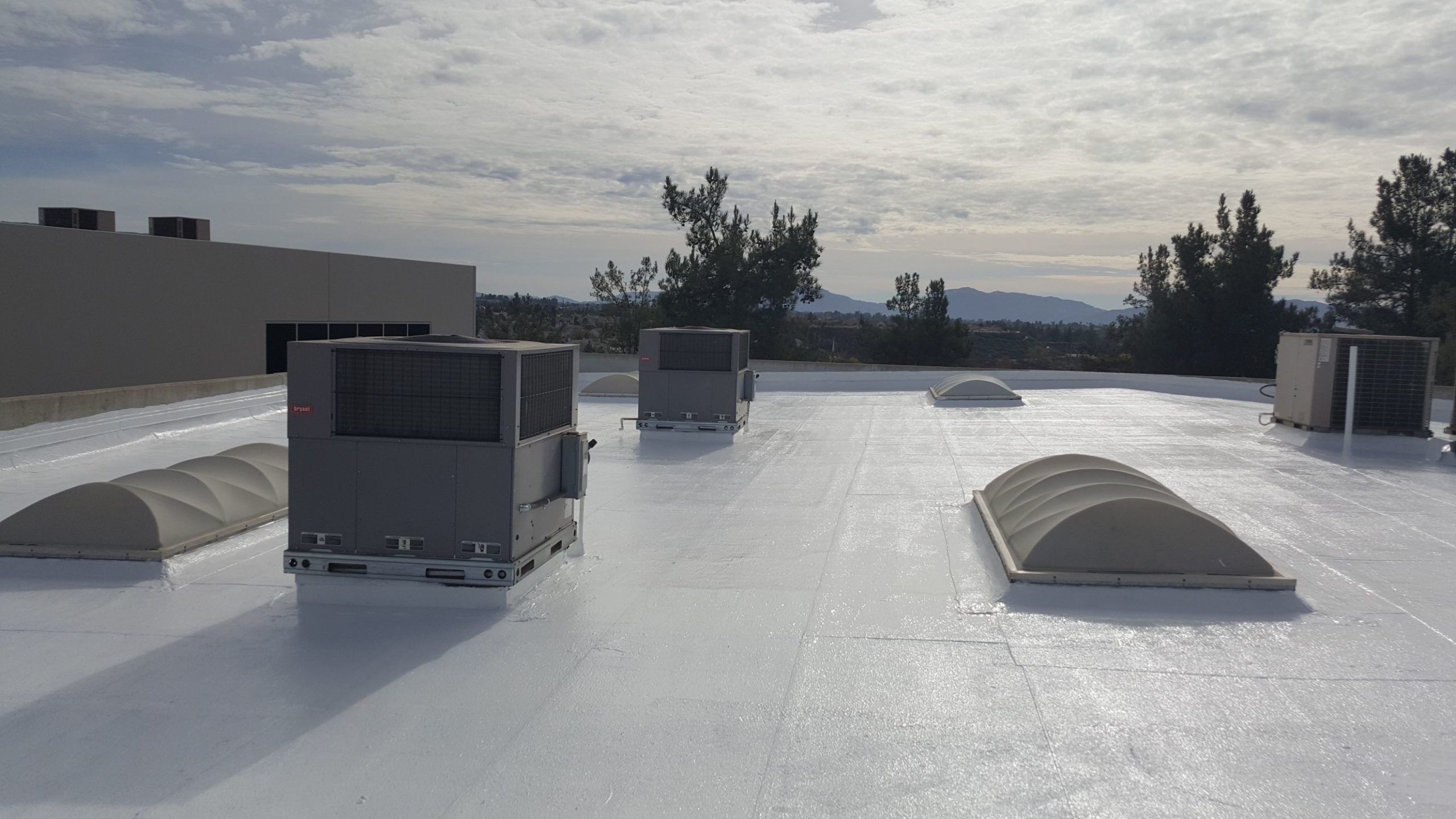
White TPO is the most-installed cool roof membrane in Birmingham commercial work. The white formulation delivers an initial solar reflectance (SRI) of 0.80 or higher — above IECC 2021's minimum 0.65 for low-slope commercial roofs in climate zone 3A — without any additional coating or treatment. Reflectance degrades gradually over time as the membrane surface accumulates the biological growth that Alabama's humidity promotes: algae and mold establish on low-slope roofs in Birmingham's climate faster than in drier markets, and periodic cleaning maintains the SRI performance that the energy code references.
White EPDM — factory-laminated white fleece or white EPDM formulation — achieves similar SRI values to white TPO and delivers EPDM's characteristic flexibility and elongation performance alongside reflectance compliance. Black EPDM is the opposite of a cool roof system (SRI below 0.10) and fails to Buildings with black EPDM that need energy code compliance have two paths: replace with white membrane or apply a reflective coating over the existing black surface. White-laminated EPDM is increasingly common on Birmingham industrial buildings where the owner wants EPDM's durability in a manufacturing environment and needs IECC compliance as a byproduct.
PVC membranes are inherently light-colored and Birmingham food-service and chemical-exposure buildings that specify PVC for membrane chemistry reasons receive cool roof compliance as a built-in attribute of the membrane selection.
Alabama IECC 2021 Compliance Documentation for Birmingham Buildings
Alabama adopted IECC 2021 through the Alabama Building Commission. For low-slope commercial roofs in climate zone 3A, IECC 2021 Section C402.3 requires a minimum aged solar reflectance of 0.55 and thermal emittance of 0.75, or a minimum solar reflectance index (SRI) of 64. Standard white TPO and EPDM membranes from the major manufacturers
We document IECC compliance on every commercial roof project at closeout: the manufacturer's published SRI data for the installed membrane, a copy of the Cool Roof Rating Council (CRRC) product listing for the specified membrane, and the energy compliance documentation that the building official requires for permit closeout. Birmingham area jurisdictions — including the City of Birmingham, Hoover, Vestavia Hills, Mountain Brook, Homewood, Bessemer, and Shelby County — require energy code documentation for permitted new construction and major reroofs. We prepare this documentation as a standard closeout deliverable.
HVAC Load Reduction — What to Expect and How to Document It
Cool roof HVAC load reduction in Birmingham is real and monetizable, but the magnitude depends on the building configuration. Single-story commercial buildings with thin insulation stacks see the most benefit — the roof surface is a proportionally large share of the total building envelope, and less insulation means more of the rooftop heat reaches the conditioned space. Multi-story buildings with deep insulation stacks see less benefit per dollar of cool roof investment, though the benefit is still present.
For building owners who need to document HVAC load reduction — for utility rebate programs, LEED certification, or investor and lender reporting — we can commission an energy model calibrated to Birmingham climate data that calculates the cooling energy reduction for the specific building. Alabama Power's commercial programs and some municipal utilities in the Jefferson County area offer incentives for energy-efficiency improvements; we provide the CRRC-certified product documentation that rebate applications typically require.
Frequently asked questions
Does Alabama require a cool roof on commercial buildings?
IECC 2021, as adopted in Alabama, requires minimum reflectance and emittance values for new commercial construction and qualifying major reroofs on low-slope commercial buildings in climate zone 3A. Standard white TPO and EPDM membranes If you are doing a reroof that requires a building permit in Birmingham or any of the surrounding municipalities, we include the energy code compliance documentation in the closeout package.
Can a reflective coating make my existing dark Birmingham roof code-compliant?
Yes, if the substrate qualifies for coating. A white silicone or elastomeric coating over existing black EPDM or modified bitumen brings the SRI above the IECC 2021 threshold for climate zone 3A, and CRRC-listed coatings have published SRI values that satisfy the building official. The coating also needs to We assess whether your existing roof qualifies for coating as part of the cool roof consultation.
How much will a cool roof actually reduce energy costs for a Birmingham building?
For a single-story Birmingham commercial building with a dark membrane or BUR surface, a white membrane replacement typically reduces cooling energy consumption 8 to 12 percent based on building energy models calibrated to Alabama climate data. In dollar terms for a 50,000 square foot building spending $70,000 per year on cooling, that is $5,600 to $8,400 per year in savings. We can facilitate an energy model for your specific building if you need the documentation for utility rebate applications or investment reporting.