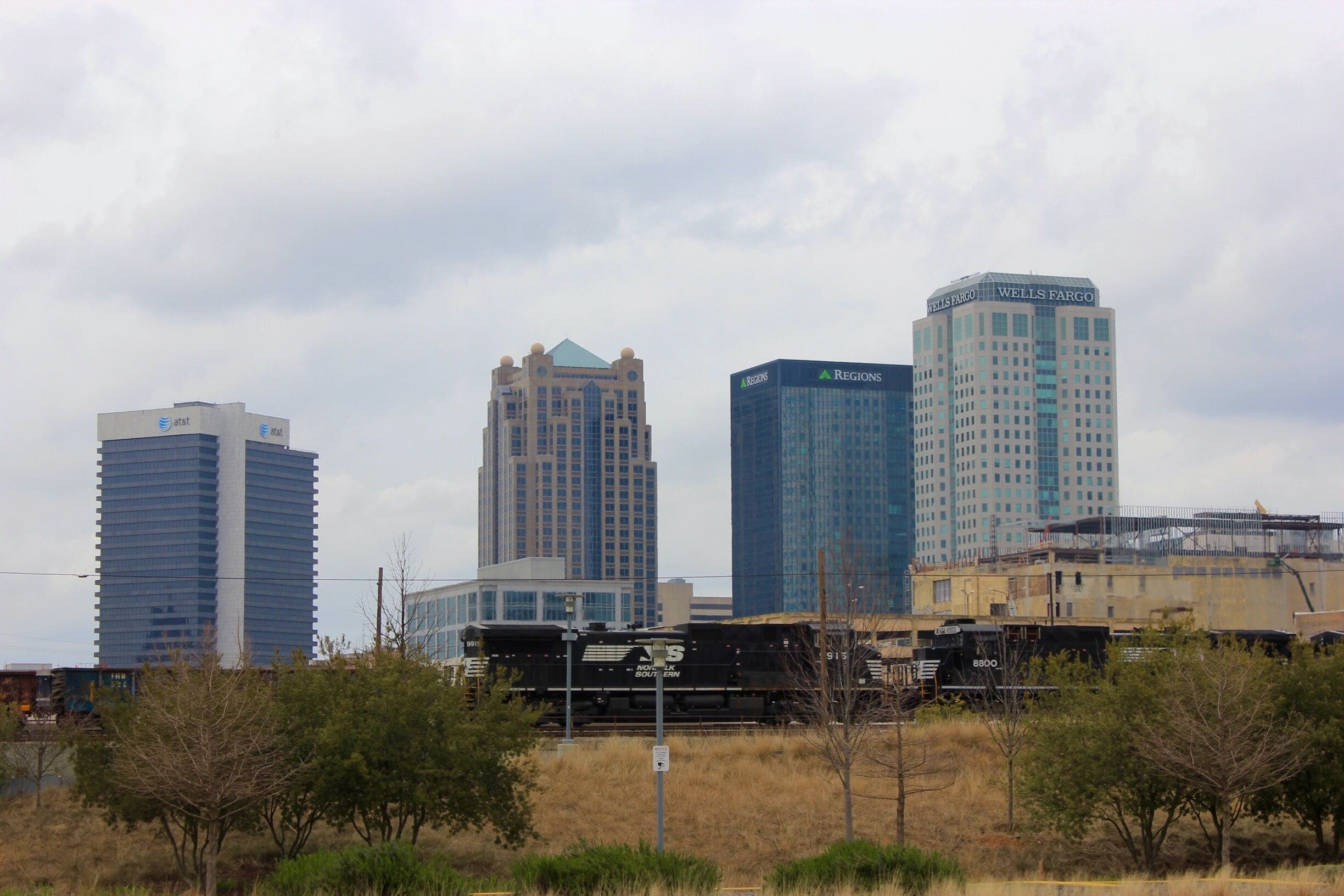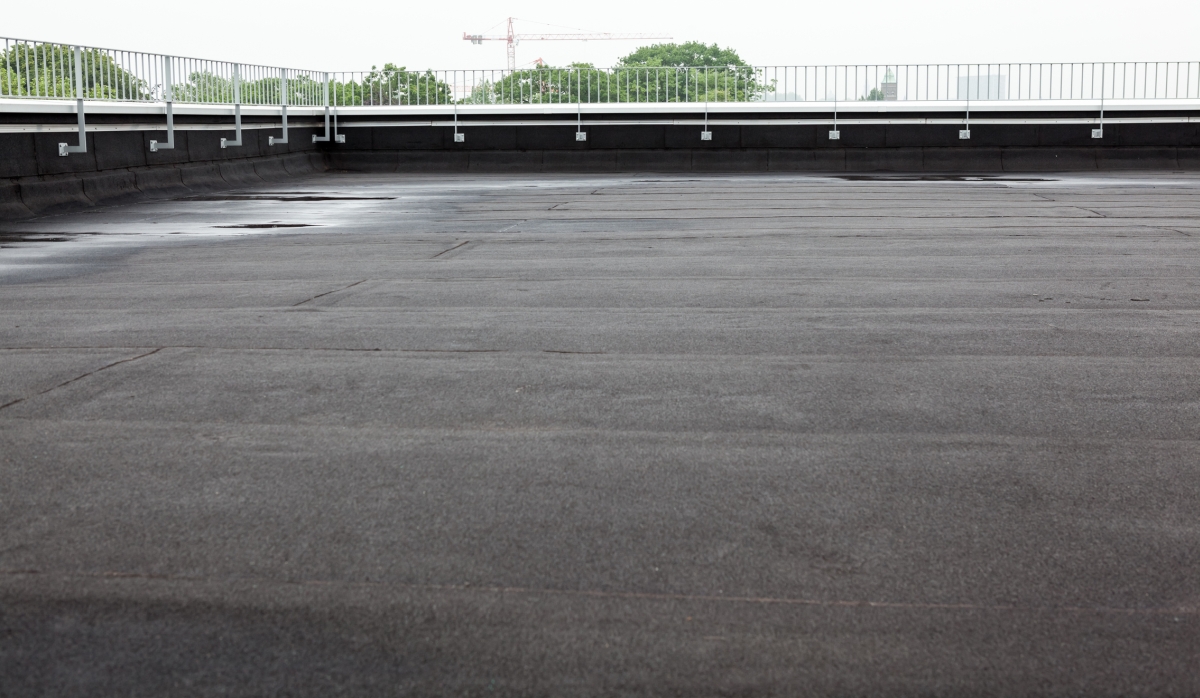
Built-up roofing assessment and replacement for Birmingham's aging downtown and mid-rise buildings. We inspect legacy 1960s-80s coal-tar and asphalt BUR systems across Jefferson County and provide honest end-of-life guidance. We compare the roof deck, insulation needs, slope, drainage behavior, equipment load, and expected traffic before recommending an assembly.
Coal-Tar vs Asphalt BUR — What's on Your Birmingham Building
Birmingham BUR systems from the 1960s and 1970s were constructed with one of two binder materials: coal-tar pitch or oxidized asphalt (Type III or IV). Coal-tar BUR is actually more durable — coal tar has self-healing properties at minor surface cracks and better long-term water resistance than asphalt BUR. Downtown Birmingham buildings with coal-tar BUR from the late 1960s that have been maintained adequately and are still watertight are not unusual findings. The complication is that coal tar is a known carcinogen, requires licensed abatement handling, and adds significant cost to removal — both in labor and in regulated waste disposal.
Asphalt BUR from the same era typically shows more surface cracking and alligatoring, particularly on south and west-facing roof zones that carry Birmingham's full summer UV and heat load. High humidity accelerates the oxidation cycle on asphalt BUR surface plies compared to drier climates. We document which binder system is on the roof during inspection because it determines the disposal protocol, removal sequencing, and the air quality plan for projects over occupied buildings.
When Full Replacement Is the Honest Call
We get asked whether a BUR system can be recovered rather than replaced. Sometimes the answer is yes: if the existing insulation is dry, the deck is sound, and the BUR surface is intact enough to serve as a stable base for a new mechanically attached or adhered single-ply system, a recover can provide a 15 to 20-year life extension at roughly half the capital cost of full tear-off and replacement.
But we will not recommend a recover when the inspection data says otherwise. If moisture core pulls show wet insulation across more than 25% of the sampled area, those wet sections must be removed — and once you are pulling out substantial sections of BUR to replace saturated insulation, the economics of recover versus full replacement shift. If the deck shows deflection, corrosion at fastener penetrations, or deterioration under wet areas, deck replacement is required and the entire assembly has to come off. We give owners this information before contract signing, not during demolition.
Replacement Scope for Birmingham BUR Buildings
BUR removal from a downtown Birmingham building involves permitting with the City of Birmingham Department of Planning, Engineering and Permits; an asbestos survey before any disturbance of pre-1980 roofing materials; coal-tar disposal protocol if applicable; and crane access coordination in blocks where street staging is restricted by City of Birmingham right-of-way requirements. The 20th Street and 5th Avenue North corridors require advance coordination with city traffic engineering for any crane or dumpster staging.
After removal, the replacement system is typically TPO or EPDM over new polyiso insulation to IECC 2021 minimum R-values for Alabama climate zone 3A, with a complete re-detail of all parapets, drains, and penetrations against current manufacturer specifications. We close out with a manufacturer NDL warranty and a documented roof asset file — so the building owner has a complete record of the roof from bare deck forward.
Frequently asked questions
Does my 1970s Birmingham building need an asbestos survey before BUR removal?
Almost certainly yes. Asphalt felts manufactured before approximately 1980 frequently contained chrysotile asbestos as a stabilizer in the binder matrix. Alabama requires an asbestos survey by a licensed asbestos inspector before any demolition or renovation that disturbs roofing materials on buildings built before 1980. We do not remove BUR materials without a completed survey and a documented abatement plan if asbestos is confirmed.
Can a built-up roof be recovered instead of replaced?
Yes, if the inspection data supports it. We pull five to ten moisture cores, inspect the deck at core locations, and assess the overall surface and flashing condition. If the insulation is dry and the deck is sound, a mechanically attached TPO or EPDM recover over the existing BUR is often viable and substantially cheaper than full tear-off. We give you the inspection data and written cost estimates for both options before you commit to any scope.
How do you handle BUR removal on occupied downtown Birmingham buildings?
Staged tear-off in 5,000 square foot sections maximum with same-day dry-in on each section — no deck left exposed overnight under any weather forecast. Hot-work fire watch per City of Birmingham Fire Prevention requirements if torch is involved. Odor and dust control measures for coal-tar roofs, including negative-air systems at roof penetrations nearest to occupied spaces. We coordinate with building management and tenants before mobilization so the work schedule is aligned to the building's operations, not just our production calendar.