Spray polyurethane foam roofing for Birmingham industrial buildings - closed-cell density, UV-protective elastomeric coating, and recover-only application over qualifying dry substrates in Jefferson County. We compare the roof deck, insulation needs, slope, drainage behavior, equipment load, and expected traffic before recommending an assembly.
Closed-Cell Foam Density and Why It Matters
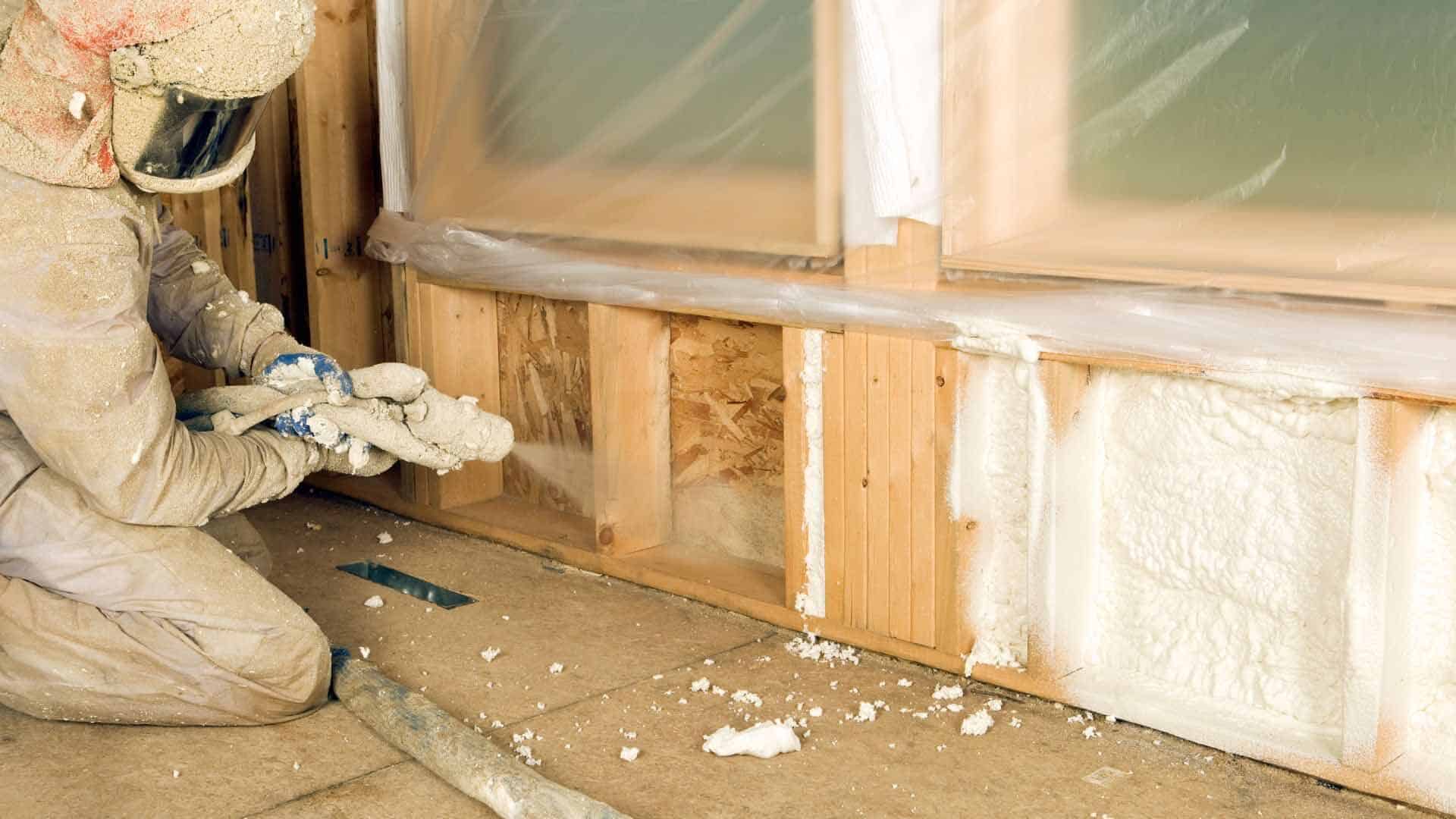
SPF roofing systems use closed-cell polyurethane foam at a minimum 2.5 pounds per cubic foot density. The closed-cell structure is what makes the foam waterproof — open-cell foam absorbs moisture and fails as a roofing substrate. We specify a minimum 2.5 pcf closed-cell density on every Birmingham SPF project and core-sample the installed foam to verify density before the protective coating goes on.
Thickness determines R-value: one inch of 2.5 pcf closed-cell foam yields approximately R-6.5. For Alabama IECC 2021 climate zone 3A compliance at R-25 minimum for low-slope commercial roofs, a 4-inch SPF application is the baseline on a bare deck. In practice, SPF recover applications run 2 to 3 inches where the existing insulation below contributes R-value to the total assembly. We calculate the existing insulation's R-value from documentation or from inspection and determine the required SPF thickness to reach code compliance.
The UV-Protective Coating Layer
SPF foam is UV-sensitive — unprotected foam degrades rapidly under Birmingham's summer solar exposure and breaks down even faster in high-humidity conditions where UV and moisture cycling combine. The protective coating applied over the foam is the system's durability layer. We apply silicone coating at 20 to 25 mil DFT over SPF on most Birmingham projects — silicone's resistance to ponding water (a consideration on Birmingham roofs where gulf-system rain events deliver high-intensity rainfall) and UV is superior to acrylic over the full Alabama climate range.
The coating layer also determines the warranty term. Manufacturers offer 10 to 20-year warranties on qualifying SPF systems based on foam density, coating type, and DFT. We carry credentials with GE Enduris and Tremco for SPF warranty work, and the manufacturer's closeout inspection includes a DFT measurement of the coating — the same standard we hold on coating-only projects.
Birmingham Industrial Buildings Where SPF Makes Sense
The best SPF candidates in the Birmingham market are large-footprint industrial buildings with complex roof geometry — multiple elevation changes, extensive rooftop equipment, non-standard drain patterns — where a conventional single-ply recover would require extensive custom fabrication and produce numerous field seams at the geometric transitions. SPF's seamless application turns complex geometry from a liability into an advantage.
Specific Birmingham corridors where SPF recover is a reasonable candidate: older manufacturing and warehouse buildings in the north Jefferson County industrial zones along the rail corridors; large industrial properties near the former U.S. Steel infrastructure in Ensley and East Birmingham; and warehouse stock in the Trussville and Clay industrial parks where buildings have complex rooftop equipment layouts and owners want to avoid the downtime of a conventional tear-off project. These buildings share the profile: large square footage, complex geometry, existing dry insulation, and owners for whom minimize production disruption is a primary project constraint.
Frequently asked questions
Why doesn't every Birmingham commercial building use SPF roofing?
Application conditions. SPF requires calm winds under 12 mph, dry substrate near zero moisture content, and ambient conditions within a narrow temperature-humidity range. Birmingham can Single-ply membrane installs across a much wider range of conditions, which is why it dominates the Birmingham market even on industrial buildings.
Can SPF be applied over any existing roof?
No. The substrate must be dry, structurally stable, and chemically compatible with polyurethane adhesion. Ballasted EPDM requires full ballast removal before foam application. Coal-tar BUR is not a compatible substrate for SPF. Grease-contaminated surfaces on restaurant buildings require thorough degreasing before foam will adhere reliably. We conduct a substrate compatibility assessment and a moisture evaluation before recommending SPF on any project.
What happens if the SPF coating gets damaged on a Birmingham building?
Minor coating damage — punctures from foot traffic, small tears from equipment maintenance — is repaired with compatible elastomeric patch material and is straightforward. Exposed foam that is allowed to UV-degrade without repair will harden and crack, eventually requiring removal and reapplication of both foam and coating in the affected zone. We specify walkway pads on all identified traffic paths in every SPF installation and include annual inspection in our SPF maintenance contracts to catch and repair minor coating damage before it progresses to a larger issue.