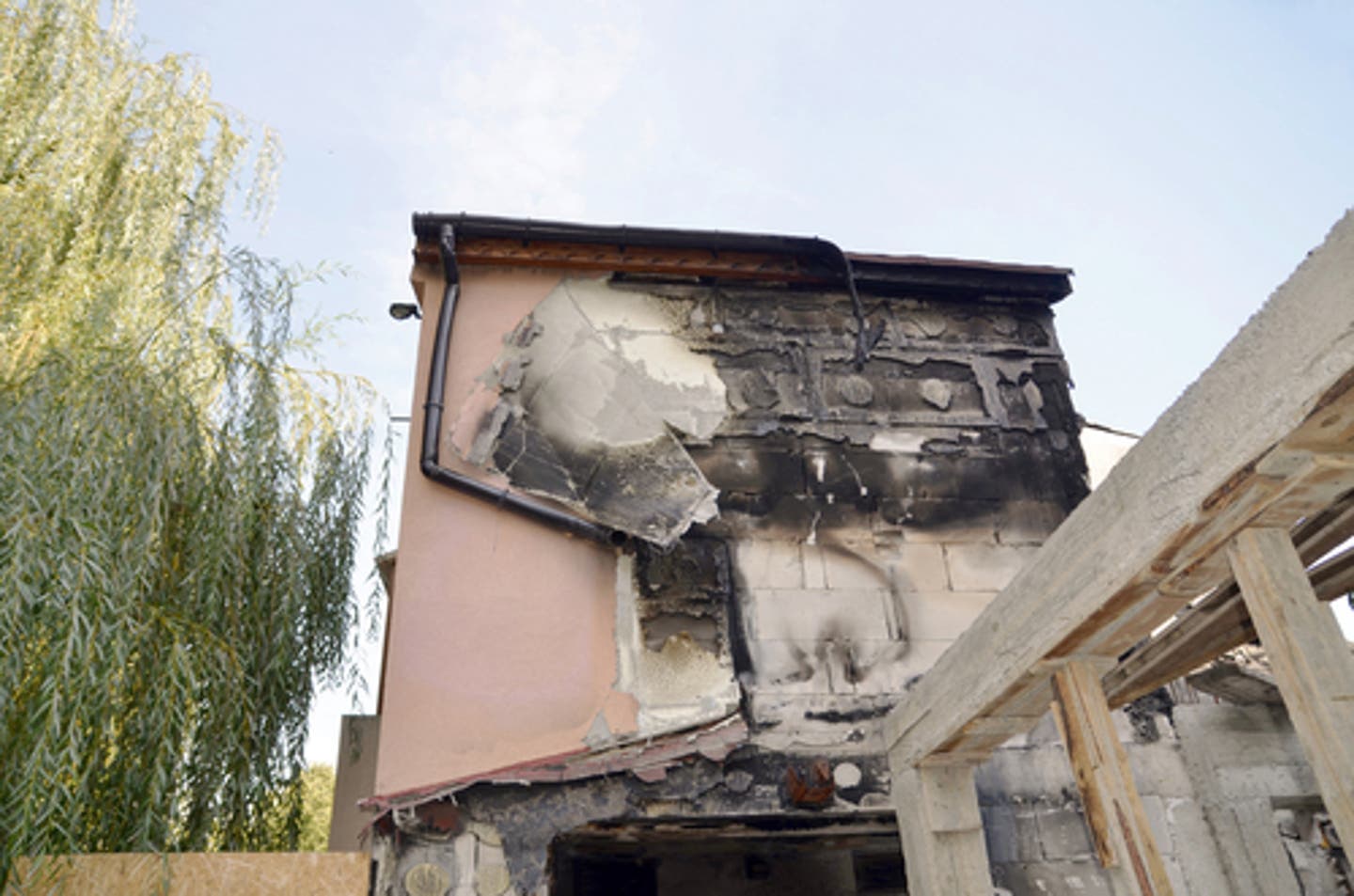
Post-fire roof scope assessment and repair for Birmingham commercial buildings - rooftop equipment fires, lightning strikes, adjacent structure fires, deck assessment, and insurance documentation. The first priority is protecting the building and determining whether the roof needs temporary dry-in, permanent repair, or a broader condition review.
Rooftop Equipment Fire Damage
HVAC unit fires on Birmingham commercial buildings are more common than most building owners expect. Compressor failures, refrigerant line breaches, and electrical panel fires in rooftop units can ignite the TPO or EPDM membrane at the curb flashing within minutes. In Birmingham's summer heat — with rooftop surface temperatures already at 140 to 160°F — ignition threshold for a compromised HVAC electrical component is lower than in cooler climates, and the fire spreads rapidly in the membrane once it starts.
The scope after a rooftop equipment fire includes the burned membrane zone, the curb flashing, the deck below the burn zone, and the insulation in the affected area. The rooftop unit itself is an equipment scope, not a roofing scope — we coordinate with the HVAC contractor but we do not scope the unit. The documentation includes the zone diagram of the burn pattern, photographs of the burn perimeter and the deck condition beneath, the rooftop unit's position relative to the damage, and the repair scope with quantities.
Insurance documentation for rooftop equipment fires needs to separate the membrane and roofing assembly damage from the equipment damage — the two may be covered under different portions of the commercial property policy, and conflating them creates complications for the adjuster.
Lightning Strike Damage
Birmingham and the surrounding region consistently ranks among the highest lightning-frequency areas in the continental United States. The combination of Gulf moisture, afternoon convective heating, and the terrain effects of the Appalachian foothills produces thunderstorm activity throughout the warm season that makes lightning strikes on large commercial flat roofs a real operational risk, not a remote possibility.
A lightning strike on a commercial flat roof produces three types of damage: direct membrane penetration at the strike point, heat damage radiating outward from the strike in the top membrane layer, and — in strikes that penetrate the deck — combustion in the insulation and potentially in the structural framing below. We probe the deck at the strike point and in the surrounding zone for thermal damage and structural compromise. Strikes that penetrated the deck require structural engineering review before the roofing scope is finalized.
Deck Replacement Decision After Fire
The deck replacement decision is the most consequential call in a post-fire roof scope. Metal deck directly exposed to fire — or showing significant heat treatment marks, which appear as blue-black discoloration on galvanized steel — has compromised structural properties that cannot be restored by treatment or coating. Deck that was shielded from direct contact by the insulation, or that was exposed only to suppression water, may be structurally sound even if visually affected.
We document deck condition at every location accessible through the fire-damaged membrane zones: heat treatment marks, visible deflection, section loss at fire-exposure locations, fastener condition at deck-to-joist connections in the affected area. Where deck condition is ambiguous — heat damage that may or may not have compromised structural capacity — we recommend structural engineering review before proceeding. We do not guess at structural adequacy.
Frequently asked questions
The fire department's suppression water soaked large areas of the building. Is that covered separately?
That is a policy and adjuster question, not a roofing question. We document suppression water infiltration paths and affected areas separately from the fire damage zones in the scope package, so the adjuster can see each damage type and its extent clearly. How suppression water damage is treated under your policy depends on the policy terms.
Can we temporarily close the roof while the insurance process is running?
Yes. Emergency dry-in after a fire event is standard — we close the fire-damaged zones with temporary membrane to stop rain infiltration while the insurance documentation and permanent repair scope are being finalized. Emergency dry-in is billed and documented separately from the permanent repair scope.
How quickly can you mobilize for a post-fire roof scope in Birmingham?
We can typically mobilize for an initial walk-through within 24 to 48 hours of notification, after the fire marshal clears the site for contractor access. The full documentation package — zone diagram, photo log, deck inspection ports, written recommendation — typically requires one additional site visit after the initial walk.