Multi-peril storm damage documentation and repair for Birmingham commercial flat roofs - wind, hail, and water damage scoped and documented separately for your adjuster or public adjuster. The first priority is protecting the building and determining whether the roof needs temporary dry-in, permanent repair, or a broader condition review.
Why Peril-Specific Documentation Matters in Alabama
Alabama commercial property policies often distinguish between named perils with different deductibles, different coverage limits, or different attribution requirements. Wind damage and hail damage may carry separate deductibles under the same policy — a common structure in Alabama commercial property insurance after the 2011 storm season. If your documentation conflates both perils into a single undifferentiated scope, the adjuster makes attribution assumptions that may not reflect what actually happened, and those assumptions affect the claim outcome.
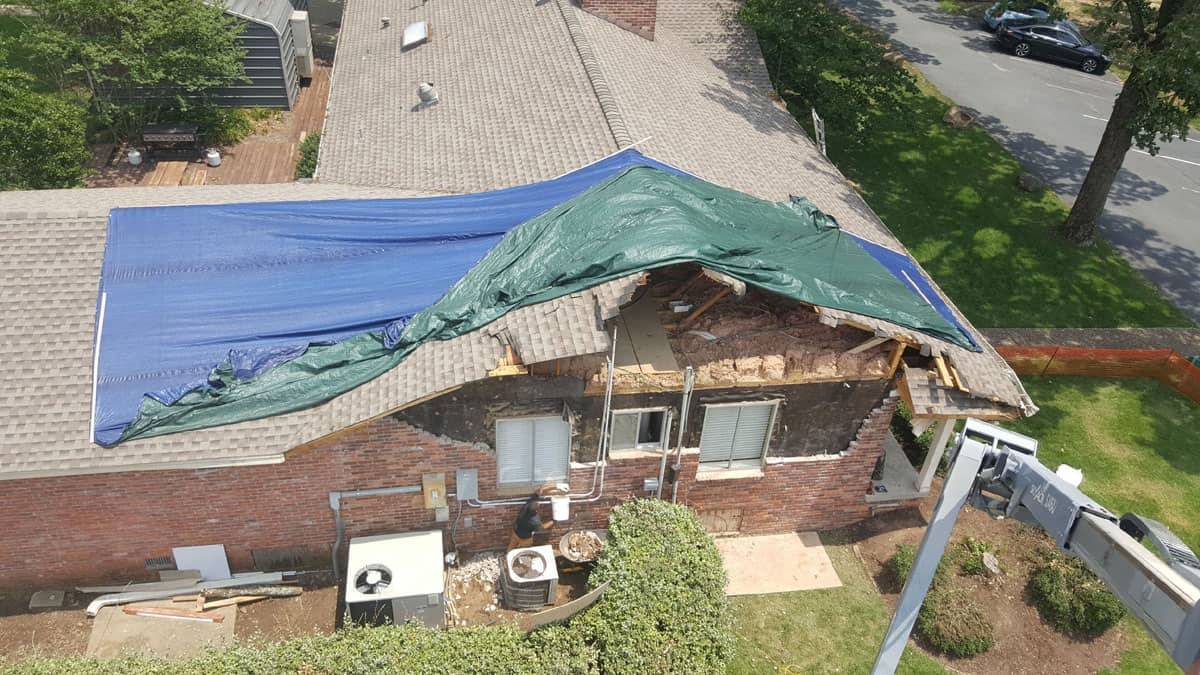
We document multi-cause damage with separate photo indexes for each peril: wind zone photos keyed to the storm track direction, hail impact photos with size reference and GPS tagging at each site, water infiltration photos at each identified entry point. The zone diagram shows each peril's damage footprint as a separate overlay. The written scope separates repair quantities by peril so the adjuster can match each cause against the relevant policy provision.
This documentation standard is more work than a single undifferentiated scope. It is also the documentation that gives your adjuster the clearest and most defensible picture of what happened to your building.
Common Multi-Cause Scenarios in the Birmingham Metro
Gulf-fed squall lines with pre-existing drainage problems: Birmingham commercial flat roofs with chronic drainage problems come into a storm event with standing water already sitting on compromised membrane. When the squall line arrives, the wind load on that standing water increases hydrostatic pressure at every low point and seam. Hail impact on standing water transmits energy through the water column instead of dissipating at the membrane surface — the damage pattern is more severe than either peril would produce independently. We document drainage conditions separately from storm-caused damage in every post-event inspection.
Ice storm following a wet cell: Birmingham averages a significant ice event every two to four years, and those events sometimes follow close behind a rain-producing system. Water that infiltrated during the storm freezes in the insulation and at seam edges, expanding and widening breach points that started as small storm-caused openings. The February 2021 event damaged Birmingham commercial roofs that had not been previously identified as vulnerable — the combination of prior rain infiltration with sustained below-freezing temperatures exceeded what those details were designed to handle. We note temperature event sequence in documentation when the damage pattern is consistent with freeze-expansion.
Sequential storms across a single spring season: Jefferson County has seen multiple documented hail events within six-week windows in recent years. A building that sustained damage in the first event and was not yet inspected accumulates additional damage from the second event. Attribution — which damage is from which storm — requires correlating documented storm dates against the building's inspection timeline. We build that documentation trail when the evidence suggests multiple contributing events.
What the Scope Package Includes
Roof zone diagram with each peril's damage footprint mapped by zone. Separate photo indexes for wind, hail, and water damage — each photograph GPS-tagged and referenced to the zone diagram. Core sample results where insulation damage is suspected beneath intact membrane. Storm event documentation: NWS Birmingham radar data, SPC storm reports, hail footprint maps where available, and wind speed records from BHM or EET weather stations.
Written repair-vs-replace recommendation stated by zone and by peril, with the basis for each recommendation noted. The basis column identifies what drives the recommendation in each zone — functional membrane damage, insulation saturation, fastener pullout density, or pre-existing condition that the storm compounded. An adjuster reading the recommendation can see the methodology, not just the conclusion.
Pre-storm condition note where a prior inspection record exists. Where no prior record exists, we document observable pre-existing conditions — prior repairs, drainage history, membrane age — and note that those observations are post-event and cannot be attributed to the storm. We do not manufacture clean attribution where the evidence does not support it.
Frequently asked questions
We had three storms this spring. How do you sort out which damage is from which event?
By correlating the damage pattern with each event's storm track, storm report, and hail footprint. Wind damage carries directional evidence. Hail impact density correlates with documented stone sizes from each storm report. Where the pattern is consistent with a single event, we document it that way. Where the pattern suggests multiple events, we note the ambiguity and document what can be attributed versus what cannot. We do not manufacture clean attribution where the evidence is ambiguous.
How long after a storm should we wait before scheduling an inspection?
Do not wait. Storm-fresh damage is cleaner to document than damage that has gone through additional weather cycles, temporary repairs, or routine maintenance work. Storm event records are also cleanest to access close to the event date. For any claim involving a specific storm event, we recommend a documented inspection within 30 days.
Will your scope package help with our Alabama carrier adjuster?
Our documentation gives the adjuster a complete scope to work from — zone diagram, peril-separated photo log, repair-vs-replace recommendation, and storm event records. Whether the adjuster uses it, modifies it, or substitutes their own scope is their determination. We are providing roofer documentation, not adjuster representation.