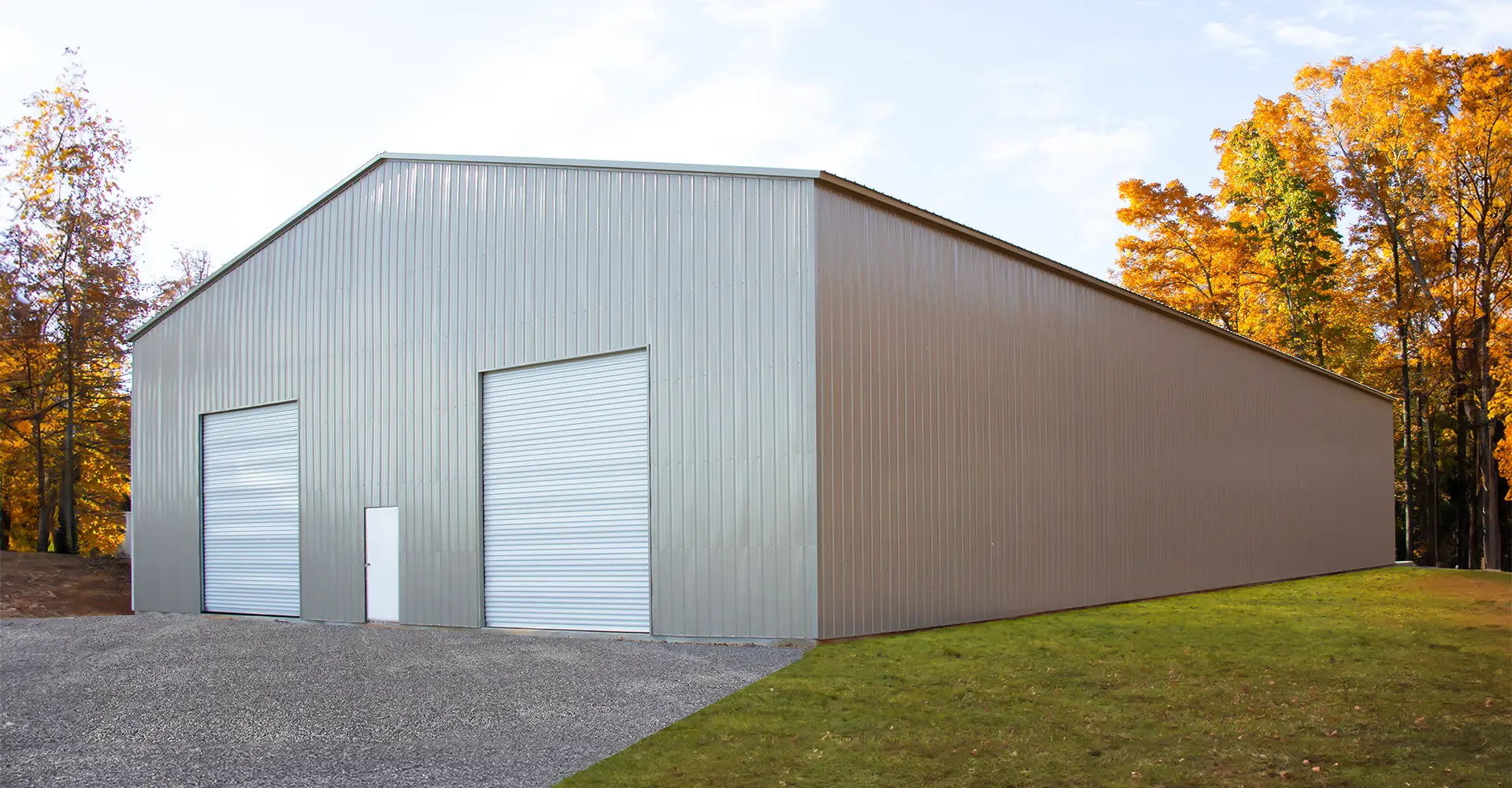
Multi-tenant industrial flex roofing in Birmingham, AL. We map every tenant penetration, install TPO & EPDM, and re-roof around bays that cannot shut down. The plan is tailored to hours of operation, occupants, deliveries, rooftop equipment, interior sensitivity, and the owner's budget horizon.
Multi-Tenant Flex Roofing Built for Birmingham's Light-Industrial Corridors
Flex buildings are the workhorses of Birmingham's economy. Along Oxmoor Road, through the Oxmoor Valley industrial pockets near I-65, and out along the U.S. corridors, you find row after row of low-slope rectangular shells split into bays — half office storefront, half warehouse roll-up door. We roof these buildings for the people who own and lease them, and we have learned that a flex roof is never one roof. It is a single membrane covering five, ten, sometimes twenty distinct tenant footprints, each with its own rooftop equipment, its own lease terms, and its own opinion about whose responsibility a leak is.
That tenant mix is the defining roofing reality of flex space. A suite occupied by a machine shop runs exhaust fans and a make-up air unit. The unit next door is a fulfillment operation with nothing but a couple of gravity vents. Two doors down a contractor has cut in a new RTU without telling anyone. Every one of those changes is a penetration through your membrane, and every penetration is a future leak if the flashing was rushed. We treat the penetration count as the single most important number on a flex roof, because it almost always is.
Why Flex Roofs Leak More Than They Should
Drive any flex park in Jefferson County and look up. You will see roofs that started life clean and have since sprouted dozens of curbs, pipe boots, conduit racks, and abandoned equipment stands left behind by tenants who moved out. Each addition was probably installed by whoever the tenant hired that week, with no coordination back to the membrane warranty. The result is a roof that is technically intact but riddled with weak points.
The most common failures we find on Birmingham flex buildings are these:
- Pipe boots and pitch pans that were never maintained — the sealant cracks in our UV and freeze-thaw swings, and water tracks straight down the penetration into a tenant's drop ceiling.
- Abandoned curbs from removed equipment, capped with a scrap of membrane and forgotten, slowly wicking water into the insulation below.
- Field seams that were welded or seamed in long runs without enough attention near the parapet transitions, where ponding tends to sit after our heavy spring storms.
- Interior gutters and through-wall scuppers clogged with debris because no single tenant feels responsible for the common roof.
None of these are exotic problems. They are the predictable consequence of a shared roof with divided responsibility. The fix is not always a tear-off — often it is a disciplined survey of every penetration, a re-flash of the failures, and a maintenance plan that puts one party in charge of the whole deck.
Mapping Every Penetration Before We Quote
Before we give an owner a number, we walk the entire roof and inventory it. We photograph each curb, each boot, each drain, and we note which tenant suite sits beneath it. That map does two things. It tells us the real condition of the roof rather than the condition of the easy-to-reach corner, and it gives the owner a document for sorting out which tenant's equipment is causing which problem. On a building with three or four leaking suites, that map usually pays for the inspection by itself.
Membrane Choices for Flex Buildings
Most Birmingham flex roofs we work on are single-ply low-slope systems, and the two we install most often are TPO and EPDM. The choice depends on the building and the tenant mix.
TPO for Heat and Reflectivity
A white TPO membrane reflects a large share of the summer sun, which matters in central Alabama where rooftop temperatures climb hard from June through September. For a flex building where tenants pay their own cooling bills and run office HVAC across the front bays, a reflective roof keeps those bills lower and reduces the thermal cycling that fatigues seams. We hot-air weld every TPO seam and probe it, because on a multi-tenant roof a single bad seam can sit unnoticed over an unoccupied bay for months.
EPDM for Durability and Movement
EPDM is a rubber membrane that handles temperature swings and foot traffic gracefully, which is why we still specify it on flex buildings where roofers and tenant contractors are constantly up there servicing equipment. It is forgiving around the many penetrations a flex roof carries, and the field seams on a well-installed EPDM roof have a long track record. For buildings with constant rooftop activity, that toughness is worth a great deal.
Whichever membrane we install, the insulation underneath gets equal attention. We build to positive drainage with tapered insulation wherever the existing deck ponds, because standing water over an interior gutter line is the fastest way to age any membrane and the hardest leak to trace back to its source.
Working Around Tenants Who Cannot Shut Down
The businesses in a Birmingham flex bay are usually small and they cannot afford to close. A cabinet shop loses money every hour the saws are off. A medical supply distributor has trucks scheduled. We plan flex roofing work around that reality. We stage materials so we are never blocking a roll-up door during loading hours, we coordinate any interior work that requires access through a suite directly with that tenant, and we keep tear-off open areas small and dried-in daily so a surprise afternoon thunderstorm never reaches a tenant's inventory.
We also keep the owner informed of which suites we are working over each day, so leasing staff can give tenants notice. On a shared roof, communication is half the job. The other half is making sure that when we leave, the warranty covers the whole membrane — not just the section we touched — and that every tenant penetration we re-flashed is documented for the next time someone adds an RTU without asking.
Tear-Off Versus Recover on an Aging Flex Roof
When a flex roof reaches the end of its life, the owner faces a choice between a full tear-off and a recover over the existing membrane. We do not push one answer. We core the roof in several spots to check whether the insulation below is wet, because a recover over saturated insulation only buries the problem and voids any honest warranty. If the cores come back dry and the deck is sound, a recover can be the economical path and keeps tear-off debris off the property. If we pull up wet insulation, we tell the owner plainly that a tear-off is the only path that protects the tenants and the building.
On a multi-tenant building, a tear-off also becomes the moment to fix everything at once — to remove the abandoned curbs, consolidate the penetrations, rebuild the drainage, and reset the whole deck to a known starting point with a single warranty. For owners holding flex assets along Oxmoor Road or the Pinson Valley corridor for the long term, that reset is often the smartest money on the building.
Storm Response for Birmingham Flex Owners
Central Alabama takes hail and straight-line wind, and flex roofs with their many penetrations are exactly the kind of roof where storm damage hides. A hailstorm that bruises a membrane around a curb may not leak for a year, and by then the insurance window has closed. After a significant storm we get owners up on the roof quickly, document any membrane bruising and seam damage with photographs and the penetration map, and help frame the claim accurately. We would rather catch a small puncture the week it happens than trace a mystery leak through three tenant ceilings the following spring.
Talk to Us About Your Birmingham Flex Building
If you own or manage a flex park in Birmingham — anywhere from the Oxmoor Valley bays to the U.S. 78 corridor to the smaller multi-tenant buildings scattered across Jefferson County — we would be glad to walk your roof, inventory every penetration, and give you a clear read on what the membrane actually needs. We will tell you when a maintenance plan is enough and when a re-roof is the honest answer, and we will plan the work around tenants who cannot afford to lose a day. Reach out and we will set up an inspection.