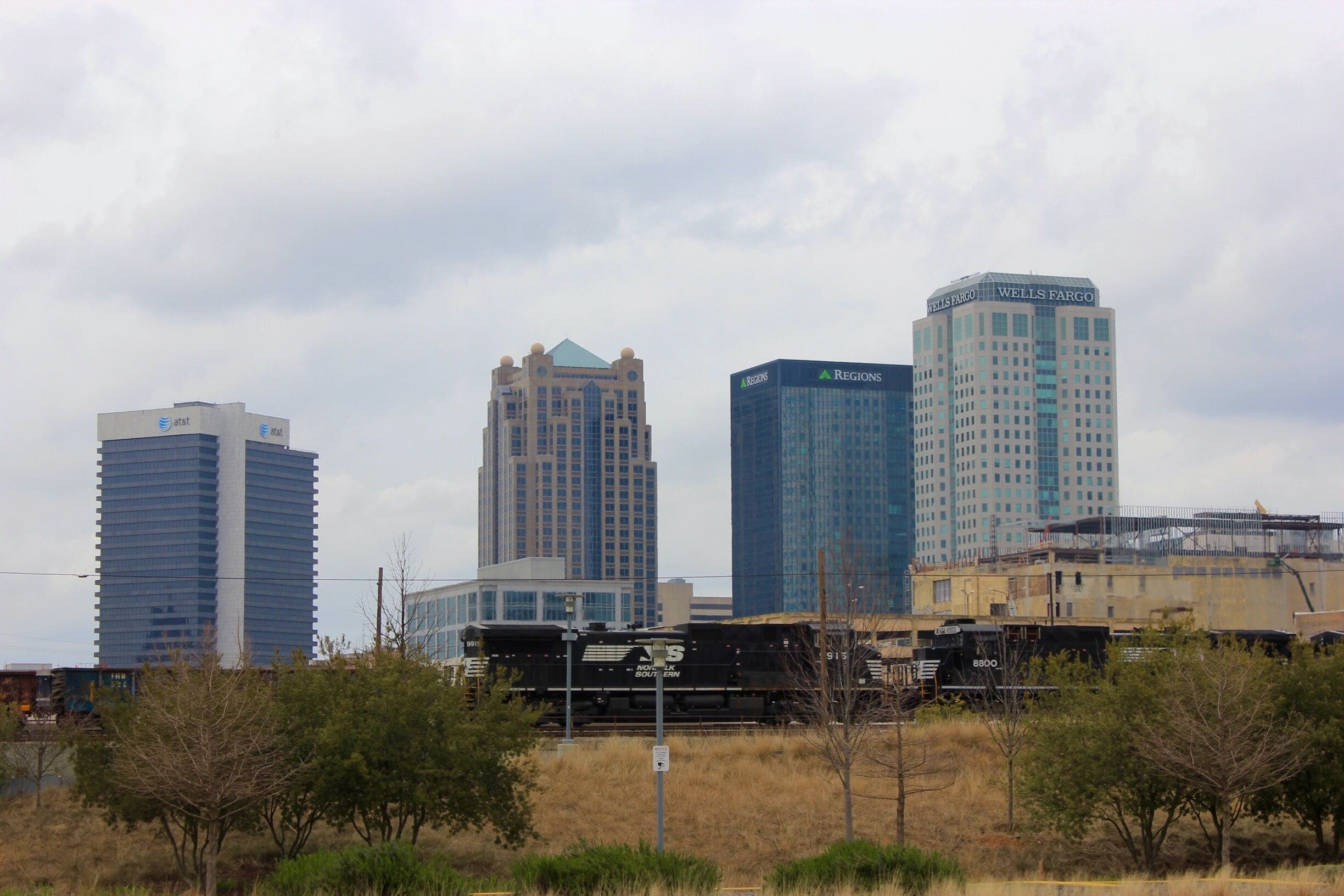
Pharmaceutical and laboratory roofing in Birmingham, AL. We seal cleanroom HVAC curbs, build redundancy over sensitive equipment, and phase work around validation. The plan is tailored to hours of operation, occupants, deliveries, rooftop equipment, interior sensitivity, and the owner's budget horizon.
Roofing for Birmingham Laboratories Where a Single Leak Is a Catastrophe
In most buildings a roof leak means a stained ceiling tile and an annoyed tenant. Over a pharmaceutical suite or a research laboratory it can mean a ruined cell line, a contaminated batch, a failed stability study, or a six-figure analytical instrument written off. We roof these buildings to a different standard because the cost of failure is measured in lost research, not patch kits. Birmingham's life-science footprint, led by the UAB research enterprise and the lab and research tenants clustered around it and along the U.S. 280 medical corridor, runs on facilities that simply cannot tolerate water from above.
Our work covers GMP manufacturing space, university and hospital research laboratories, diagnostic and testing facilities, and the specialty incubator and flex-lab buildings that have grown up near the academic core. Each carries its own validation pressures, but they share one demand: the roof keeps its integrity and stays out of the way of everything happening below it.
The Roof Is Part of the Controlled Environment
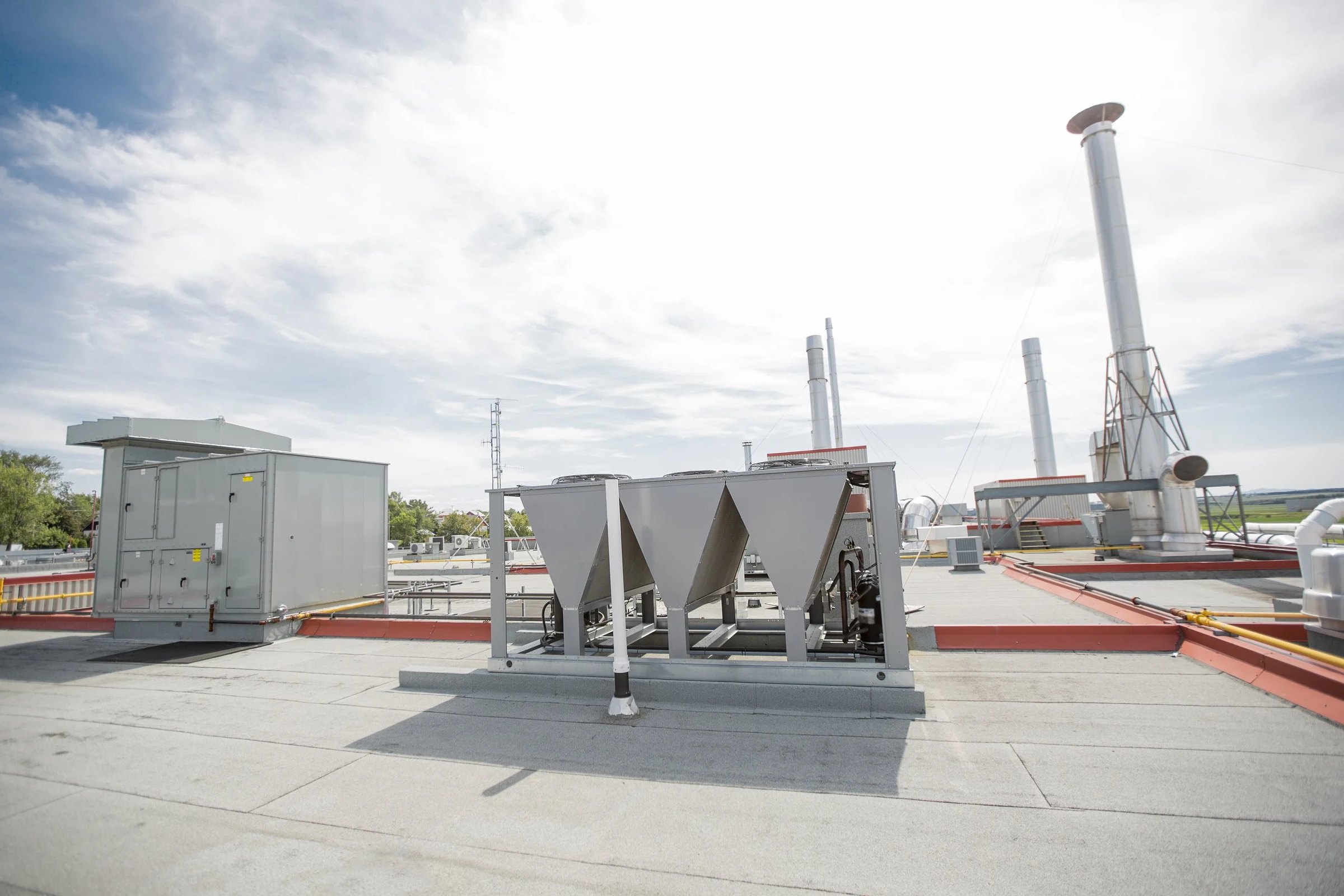
A modern lab roof is not a quiet slab. It is the platform for the building's cleanroom and containment systems: large air handlers, HEPA-filtered supply units, exhaust fans pulling from fume hoods and biosafety cabinets, chillers, and the dense maze of conduit and process piping that feeds them. Those units sit on curbs that puncture the membrane dozens of times over, and they vibrate, cycle, and load the deck continuously.
We treat every one of those curbs as a sealed, serviceable detail:
- Properly sized, properly flashed curbs that are tall enough to clear water and snug enough that vibration never works the flashing loose.
- Pre-engineered pipe supports instead of membrane laid directly under sleepers and conduit, so foot traffic and service work do not abrade the surface.
- Redundant sealing at exhaust stacks, where corrosive lab effluent can be discharged and where a failed seal would draw moisture straight into a sensitive zone.
Because air-handling equipment on a lab roof maintains the pressurization cascades that keep clean spaces clean, a flashing failure is not just a water problem. It can disturb the very pressure relationships the cleanroom depends on. We coordinate our roof penetrations with how the building is supposed to breathe.
Membranes and Assemblies We Specify
Mechanically Robust, Chemically Aware
For most Birmingham lab roofs we specify a thick reinforced membrane — TPO or PVC depending on the chemical exhaust profile — over a high-compressive cover board that stands up to constant maintenance traffic around the mechanical units. Where rooftop exhaust carries solvents or acids, PVC's chemical resistance often wins. The goal is an assembly that tolerates being walked on by HVAC and validation techs week after week without telegraphing damage into a leak.
Redundancy Over Critical Suites
Above the most sensitive spaces — sterile fill rooms, instrument suites, vivarium areas — we build in redundancy: tougher membrane, extra ply at the field seams, and leak-detection-friendly details so that if water ever does intrude, it is found and isolated before it reaches the ceiling below.
Insulation That Holds Its R-Value
Cleanrooms and cold-storage laboratories run tight temperature and humidity bands, and a roof that loses thermal performance forces the HVAC to fight back, driving energy cost and stressing equipment. We specify insulation thickness and layout that holds its rated R-value and resists the moisture gain that quietly ruins a wet assembly. A dry, well-insulated deck is part of what keeps the rooms below stable and in spec.
Phased Work That Respects Validation and Containment
You cannot tent off a GMP suite and start tearing. Every disturbance over a controlled space has to be planned around the air balance, the cleaning protocols, and the validation status of the rooms underneath. We sequence reroofs in tight, fully dried-in sections, never opening more deck than we can close and seal the same shift. We coordinate shutdown of individual air handlers with your facilities and quality teams rather than working blind, and we keep the work zone clean enough that we are not introducing the contamination the building exists to prevent.
For occupied research buildings we schedule the loudest and most disruptive work — fastening, equipment lifts, crane picks — around critical experiments and instrument runs whenever your investigators flag them. The roof project bends to the science, not the other way around.
Birmingham Weather and the Lab Roof
Birmingham delivers heavy, fast rainfall, long humid summers, and the occasional severe storm rolling out of the Tennessee Valley. For a lab, drainage is a containment issue as much as a maintenance one. We confirm primary and overflow drainage is sized for our intense downpours so water never ponds against the equipment curbs that protect sensitive space below. We also pay close attention to hail and wind-uplift detailing, because a membrane breach during a spring storm over an instrument room is exactly the failure these buildings cannot absorb.
Maintenance That Catches Problems Before Validation Does
The cheapest leak is the one found on a roof walk, not in a clean room. We set lab clients up with scheduled inspections that focus on the high-risk details — curb flashings, exhaust penetrations, drains, and seams around the mechanical zone — and we document everything so it slots into your facility's record-keeping. Catching a lifting seam or a tired pipe boot in the fall means it never becomes a deviation report in the spring.
Serving Laboratories Across the Birmingham Region
We support pharmaceutical, research, and research roofs throughout the metro: the UAB-adjacent research district, the medical and lab tenants along U.S. 280 and Lakeshore, the testing and diagnostic facilities in Hoover and Homewood, and the growing life-science and flex-lab space in the suburbs. If your facility holds sensitive equipment, sterile process, or irreplaceable research, the roof over it should be treated like the critical system it is.
Schedule a Lab Roof Assessment
If you manage a laboratory or pharmaceutical facility in Birmingham and you are uneasy about aging curb flashings, a membrane near the end of its life, or recurring drips around the mechanical units, reach out. We will assess the roof against the risk profile of what sits below it and give you a clear, validation-aware plan to keep water out and your work protected.