Central Alabama's spring storm season brings hail-producing supercells through Jefferson and Shelby County most years, and commercial roofs take that impact differently depending on the membrane and the building underneath it. A hail insurance claim lives or dies on documentation — hail damage is frequently invisible from the ground and just as frequently disputed as cosmetic rather than functional. Building that record correctly is the difference between a claim that pays for real repair and one that gets closed as no material damage found.
How Hail Reads Differently Across Birmingham's Roof Stock
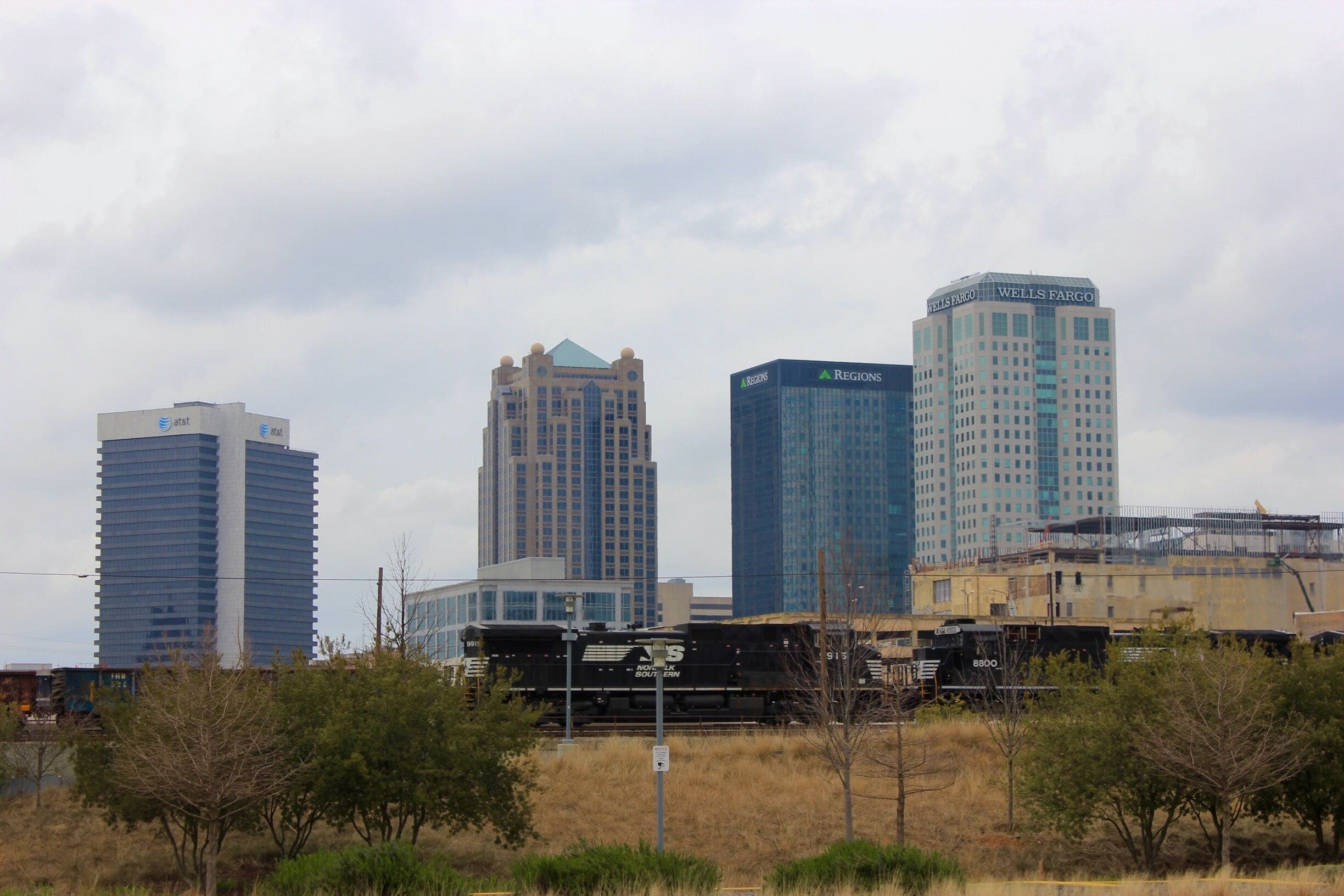
Downtown Birmingham's loft-conversion buildings and the older Sloss-era industrial stock around the city core often carry built-up or modified bitumen roofing, where hail impact strips the protective granule surface and exposes the underlying mat — a visible, countable form of damage. UAB medical district buildings and newer I-20/59 corridor warehouses more often run TPO, PVC, or EPDM single-ply membranes, where hail impact shows up as compressed insulation beneath an intact membrane surface rather than a visible puncture. Rooftop mechanical equipment, common on medical and institutional buildings, takes hail dents that are easy to document but easy to overlook if the equipment isn't inspected as part of the roof claim.
Building the Hail Claim Documentation Package
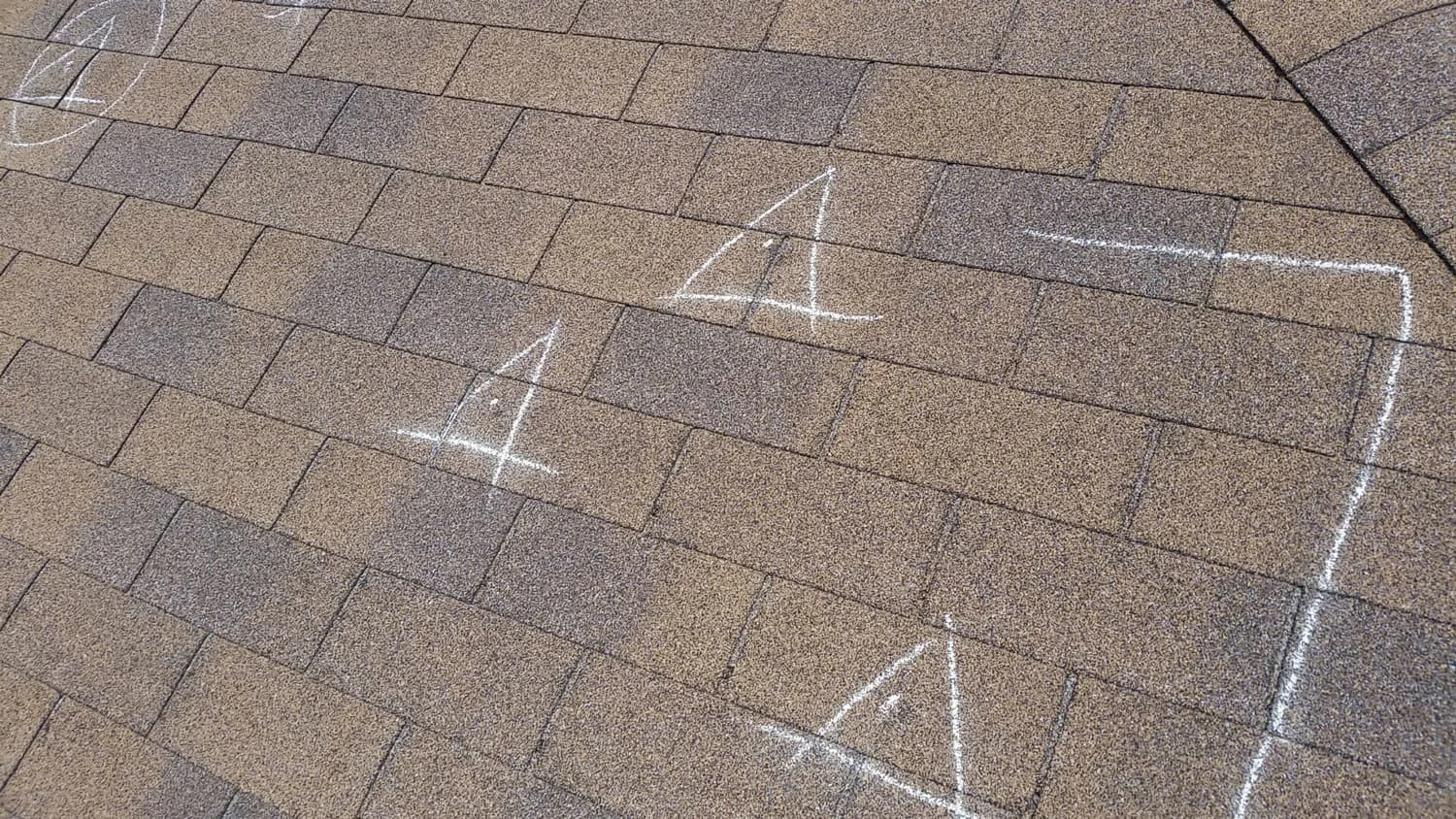
We map the roof into zones and record impact density — strikes per test square — in each one, rather than describing damage as a general impression. Granule loss on modified bitumen gets measured by percentage of exposed mat per zone. On single-ply membranes over polyiso or gypsum cover board, we probe and, where warranted, pull cores at impact-dense locations to check for insulation compression that isn't visible at the surface. Metal roof panels and rooftop equipment get a dent count and dent-size photo log. Every finding is tied to the zone diagram so the adjuster can see exactly where each measurement was taken.
Why Hail Claims Get Disputed
The most common dispute in a commercial hail claim is whether the impact damage is functional — does it compromise the roof's waterproofing or its remaining service life — or purely cosmetic. A membrane can show visible impact marks without a breach, and carriers sometimes use that distinction to deny a claim outright. Our documentation addresses the question directly: on single-ply membranes we note whether impacts show stress whitening or measurable thinning consistent with reduced service life, and on modified bitumen and metal we quantify the granule loss or dent density that supports a functional-damage finding rather than leaving it as an opinion.
Timing After a Hail Event
Hail evidence degrades. Granule loss on modified bitumen can wash further into drains after the next rain, and the low-angle-light conditions that make impact impressions visible on single-ply membranes are easiest to document within the first days after the storm. We prioritize post-hail inspections in Birmingham and try to get on affected buildings within 24 to 48 hours of a reported event. We're your roofing contractor, not a public adjuster — we document and substantiate the roof damage so you and your adjuster work from an accurate, defensible scope.
Hail Damage Insurance Claim Questions
How do you tell hail damage from normal roof aging on an older membrane?
Impact damage has a pattern — circular impressions or granule loss concentrated where hail struck, distributed across the roof consistent with the storm rather than isolated to high-traffic or high-wear areas. We document impact density by zone so the pattern itself supports the finding.
Can a commercial roof have hail damage that isn't visible from the ground?
Yes, and this is the most common reason hail claims get underscoped. Insulation compression beneath an intact single-ply membrane, granule loss visible only at close range in low-angle light, and equipment dents on rooftop units all require an actual roof inspection, not a drive-by look.
How quickly can you inspect after a hail storm?
We prioritize post-storm response and can typically get to a Birmingham commercial building within 24 to 48 hours of a reported hail event, before rain or foot traffic disturbs the surface evidence.
What if the adjuster's initial hail inspection found no damage?
We can perform a second-look inspection with zone-level impact density mapping and, where warranted, core samples at impact-dense locations. That documentation goes back to the adjuster as a supplemental report addressing specifically what a brief initial inspection may have missed.
Does hail damage always mean the roof needs full replacement?
No. The repair-versus-replace decision depends on impact density, membrane type, and remaining service life, documented by zone. Some hail claims are scoped as targeted repair; others, where damage is widespread, are scoped as full replacement. Our documentation reflects the roof's actual condition either way.