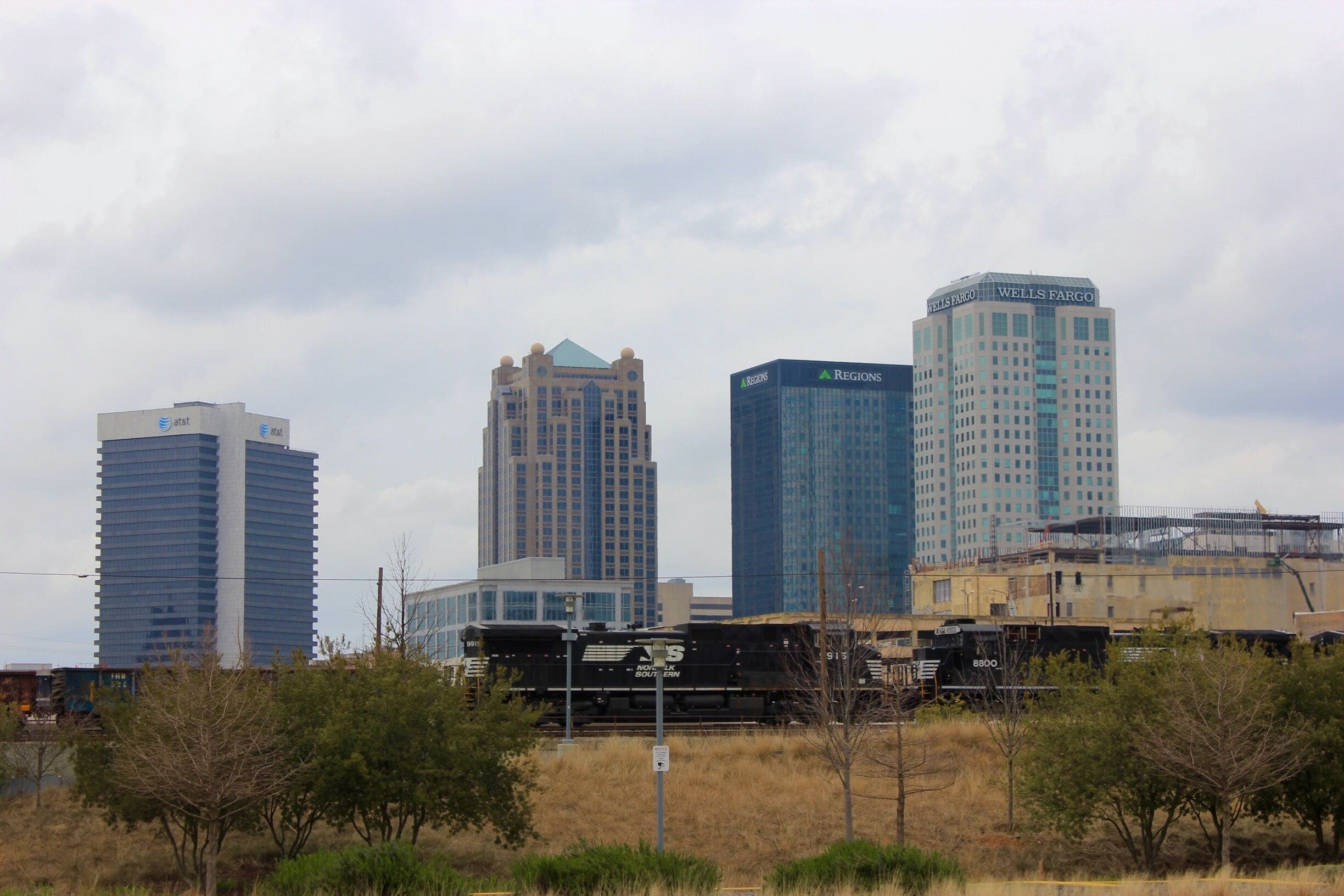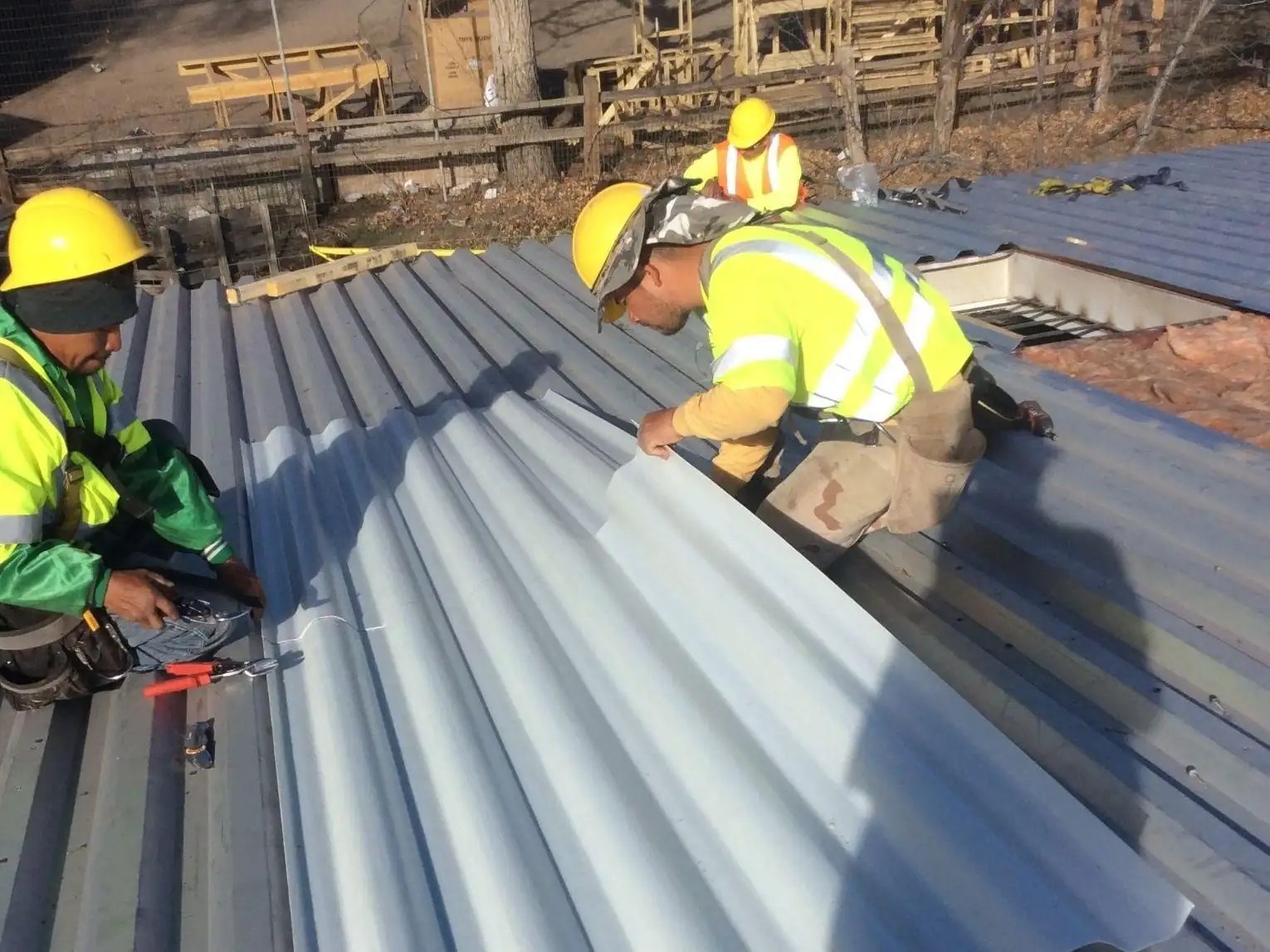
Standing seam metal roof installation and replacement for Birmingham commercial buildings - steel and aluminum panels, concealed fastener systems, 40-year service life, and wind-uplift specifications built for Jefferson County tornado exposure. The work is planned around roof access, active building use, drainage, membrane condition, and the owner's timeline for repair, maintenance, or capital work.
Panel Systems — Steel vs. Aluminum
Galvalume steel is the standard for most Birmingham commercial standing seam work. It handles the temperature cycling from summer heat and winter ice better than bare steel, costs less per square than aluminum, and is available in the panel widths — 12-inch, 16-inch, and 18-inch — that suit most commercial building spans. We specify 24-gauge for standard commercial applications and 22-gauge for high-traffic or high-impact environments.
Aluminum panels are specified for buildings in coastal or high-humidity microclimates where corrosion risk is elevated, for owners who want a lighter-weight system, or for architectural applications where the anodized finish options matter. Aluminum costs more per square than Galvalume steel but eliminates long-term corrosion risk entirely. In Birmingham's inland climate, Galvalume is the more common specification — aluminum shows up on distinctive architectural projects and on buildings where the owner's portfolio standard calls for it.
Panel finish matters for heat performance. PVDF (Kynar) coatings on light-colored or reflective panels can reduce roof surface temperatures by 30 to 50 degrees compared to dark unpainted metal — meaningful in a market where Birmingham July and August afternoons push dark-metal surface temperatures past 160°F. We specify PVDF coatings on every standing seam installation exposed to direct sun, not as an upgrade but as a standard specification.
Clip Systems and Wind-Uplift Engineering
Standing seam performance in high-wind events is almost entirely determined by clip selection and spacing. Fixed clips — which anchor the panel rigidly — provide the highest uplift resistance but restrict thermal movement and can cause oil-canning and fastener fatigue on long panel runs. Floating clips allow lateral movement under thermal cycling while maintaining the uplift resistance the clip is rated for. We use floating clip systems on all panels over 30 feet long and on all applications where summer-to-winter temperature differential exceeds 60 degrees — which includes virtually every exposed rooftop in Jefferson County.
Clip spacing is engineered against the building's wind-uplift requirement under IBC 2021 and the local exposure category. For Jefferson County commercial buildings, we do not use the minimum code spacing in any corridor that sits within the documented April 2011 storm tracks. The superoutbreak produced sustained EF4 winds in portions of Jefferson County — we design against that exposure for every building in the affected metro zone.
Every clip installation is inspected by our project manager before panel installation begins. Clips missed or improperly seated are corrected before the panel goes down — once the panel is seated and seamed, clip access is gone. We document clip spacing photographically on a grid diagram at closeout.
Penetrations, Curbs, and Flashings
Standing seam penetration details are the most failure-prone element in the system. Pipe penetrations, HVAC curbs, skylights, and parapet transitions all require custom-formed flashings that integrate with the panel seam geometry — you cannot simply apply a generic rubber boot to a standing seam panel the way you would on a flat membrane roof. We fabricate all curbs and penetration flashings to match the panel profile and standing seam height of the specific system we are installing.
HVAC curb flashing is especially important for Birmingham commercial buildings, which frequently run rooftop packaged units on every section. We size curb flashings to match the HVAC manufacturer's curb dimensions, integrate the standing seam panel into the curb transition with a continuous sealant-backed lap, and cap the curb with a counter-flashing that allows the HVAC unit to be lifted and replaced without tearing the roof membrane. That detail matters — on a 40-year metal roof, the HVAC units will be replaced two to four times before the roof will.
Eave and ridge details are sealed with PVDF-compatible sealant, not generic silicone. Thermal movement at the ridge and eave requires a sealant that stays flexible through Birmingham's full temperature range — from 10°F winter ice storms to 100°F summer afternoons. We test sealant lot certifications before installation and document the sealant specification on the closeout package.
Frequently asked questions
How long does standing seam metal roofing last in Birmingham's climate?
A properly installed Galvalume steel standing seam system with PVDF coating runs 40 to 60 years in central Alabama conditions. The climate stresses that matter most — UV exposure, freeze-thaw cycling, and hail impact — are all within the design parameters of a commercial-grade standing seam system. We have inspected 35-year-old standing seam roofs in the Birmingham metro that needed only minor eave and penetration maintenance.
Is standing seam more expensive than TPO for a Birmingham commercial building?
The installed cost per square for standing seam is higher than TPO — typically 40 to 70 percent more on a per-square basis depending on panel gauge, clip system, and penetration complexity. Over a 40-year horizon, standing seam eliminates two full reroof cycles that a TPO system would require. For owners running a long capital horizon on a building they intend to hold, the lifecycle cost comparison often favors standing seam. For owners on shorter hold periods, TPO's lower first cost is the right call.
Can standing seam be installed over an existing flat roof?
Yes, with a structural framing system. A standing seam over-roofing application uses a subframing system — typically steel hat channels or a proprietary clip-and-purlin system — installed over the existing flat roof. The new standing seam panel system sits above the old membrane on the subframe, creating a ventilated air space that improves drainage and thermal performance. This approach avoids tear-off costs and can often be scoped without disturbing existing rooftop equipment. We assess the existing roof and structural capacity before recommending this approach.
Do you pull permits for standing seam installation in Birmingham?
Yes, always. Standing seam metal roofing on commercial buildings in Birmingham, Hoover, Mountain Brook, Vestavia Hills, Homewood, and every other Jefferson County municipality requires a building permit before work begins. We pull