Central Alabama sits inside a genuine severe wind corridor. Straight-line thunderstorm winds, spring squall lines, and tornado activity moving through the Birmingham-Tuscaloosa corridor — the region's exposure was on full display during the April 2011 tornado outbreak — all put low-slope commercial membranes at risk. Wind claims are also some of the most contested claims a Birmingham property owner will file, because carriers frequently write wind lift damage off as ordinary wear. Documenting the difference is most of the work.
How Wind Damage Shows Up on a Commercial Roof
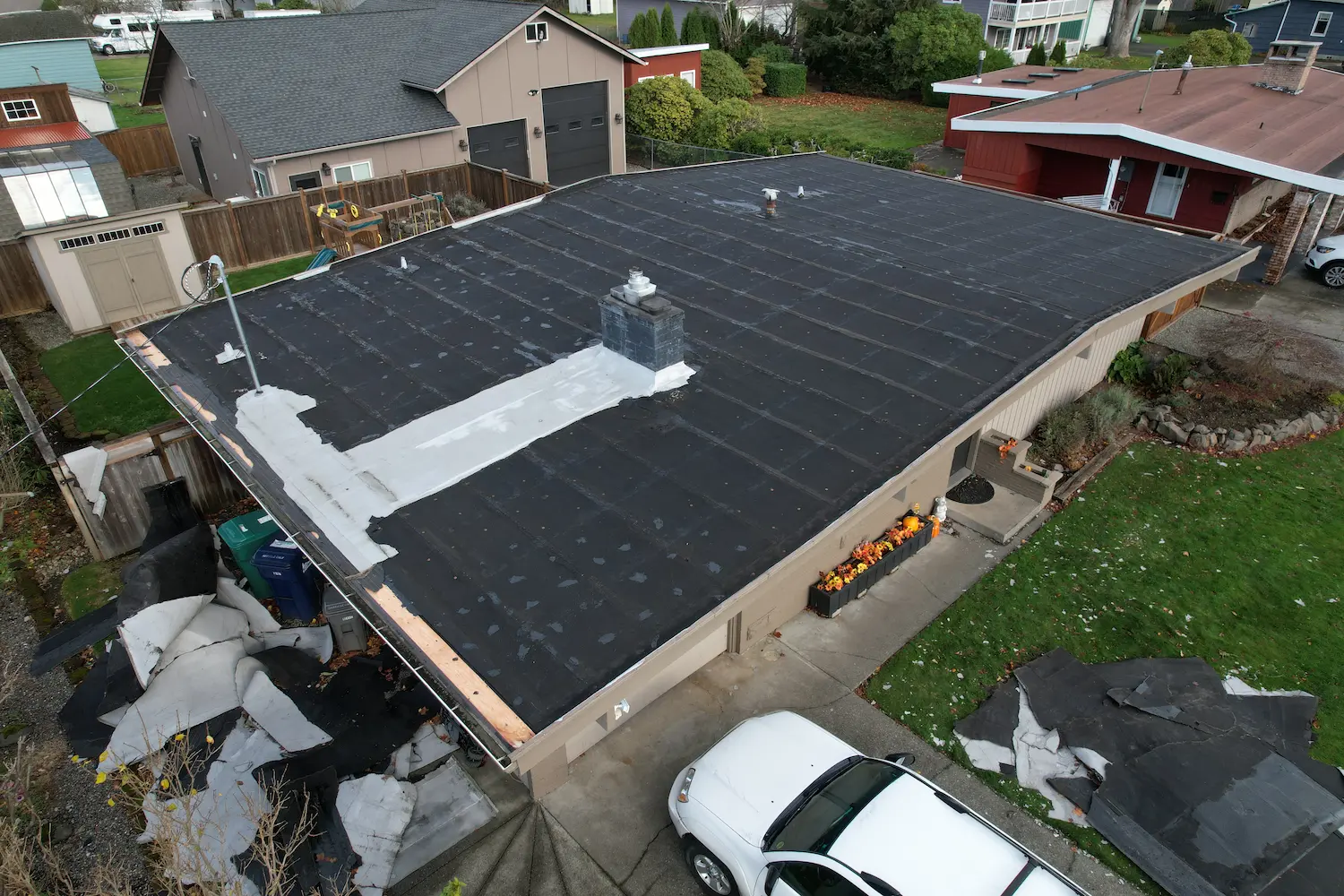
Wind rarely tears a membrane open in one obvious spot. It works at the edges first — perimeter and corner zones where uplift pressure is highest. On older Sloss-era industrial buildings around downtown and the near east side, that means lifted or torn edge metal, cracked parapet caps, and membrane creased where it was pulled against a coping edge. On I-20/59 corridor warehouses with large TPO or EPDM fields, wind uplift shows up as blistered or billowed membrane between fasteners, seams that have started to separate, and insulation boards shifted out of alignment beneath an otherwise intact surface. On UAB medical district buildings, rooftop mechanical equipment and screen walls take direct wind load, and curb flashing failure around units is a common wind-claim finding that gets missed in a five-minute look from the ground.
Central Alabama's Wind Exposure
Jefferson and Shelby County commercial roofs see wind damage from more than one source in a given year: spring severe thunderstorm season, occasional tropical remnants pushing moisture and wind up from the Gulf, and tornado-producing supercells that track through the wider Birmingham metro. The April 2011 outbreak remains the reference point most Birmingham property owners think of, but wind claims on commercial roofs come from ordinary severe thunderstorm activity far more often than from a named tornado event. Straight-line wind in the 60 to 80 mph range is enough to lift edge metal and open membrane seams on an aging low-slope roof, and that kind of event happens multiple times most storm seasons.
Documenting a Wind Claim
A wind claim package starts with a zone diagram — corners, perimeters, and field areas mapped separately, since wind uplift pressure is not uniform across a roof. Every lifted seam, torn flashing piece, displaced gravel or ballast, and area of membrane creep gets photographed and referenced to that diagram. Where uplift has separated membrane from insulation without an obvious tear, we check fastener pull and probe for insulation movement so the report reflects damage that is not visible from a walk-by. Direction matters too: where the damage pattern is consistent with the recorded wind direction for the event, we note that, because it helps tie the claim to a specific storm date rather than leaving it open to a general wear-and-tear argument.
What Adjusters Look For in Wind Claims
The central question in most disputed wind claims is whether the damage is storm-caused or long-term wear that happened to become visible after a storm. Our documentation addresses that directly — comparing fastener spacing and pattern to manufacturer specification, noting whether membrane separation follows a pressure-consistent pattern versus scattered aging failures, and photographing any pre-existing repairs separately from new damage. We're your roofing contractor, not a public adjuster — we document and substantiate the roof damage so you and your adjuster work from an accurate scope, including the parts of the claim that are more likely to be contested.
Wind & Storm Damage Insurance Claim Questions
Will my insurer cover wind damage or call it wear and tear?
That determination comes down to the documentation. Wind uplift has a recognizable pattern — concentrated at corners and perimeters, following the recorded wind direction, distinct from scattered aging failure spread evenly across the field. Our job is documenting that pattern clearly enough that the distinction is not left to guesswork.
How soon after a wind or storm event should the roof be inspected?
As soon as it's safe to access the roof, ideally within a day or two. Wind-lifted seams and displaced flashing can shift further or blow off entirely in the next storm, and documenting the original damage pattern gets harder the longer it sits.
Can wind damage exist without a visible hole in the membrane?
Yes, and this is one of the more commonly underscoped types of wind damage. Uplift can separate membrane from insulation, shift insulation boards, or fatigue seams without an obvious tear. We check for these conditions specifically rather than only documenting visible openings.
Do you work with adjusters on tornado-related roof damage?
Yes. For events tied to a documented tornado track through the Birmingham metro, we reference the available storm data alongside our own damage documentation when we meet the adjuster on the roof.
What if the wind claim gets denied as pre-existing damage?
We can return to the roof, document the uplift pattern in more detail, and separate any genuinely pre-existing conditions from the new storm damage in a supplemental report. That report goes back to the adjuster; if the dispute needs formal negotiation, that's a public adjuster's or attorney's role.