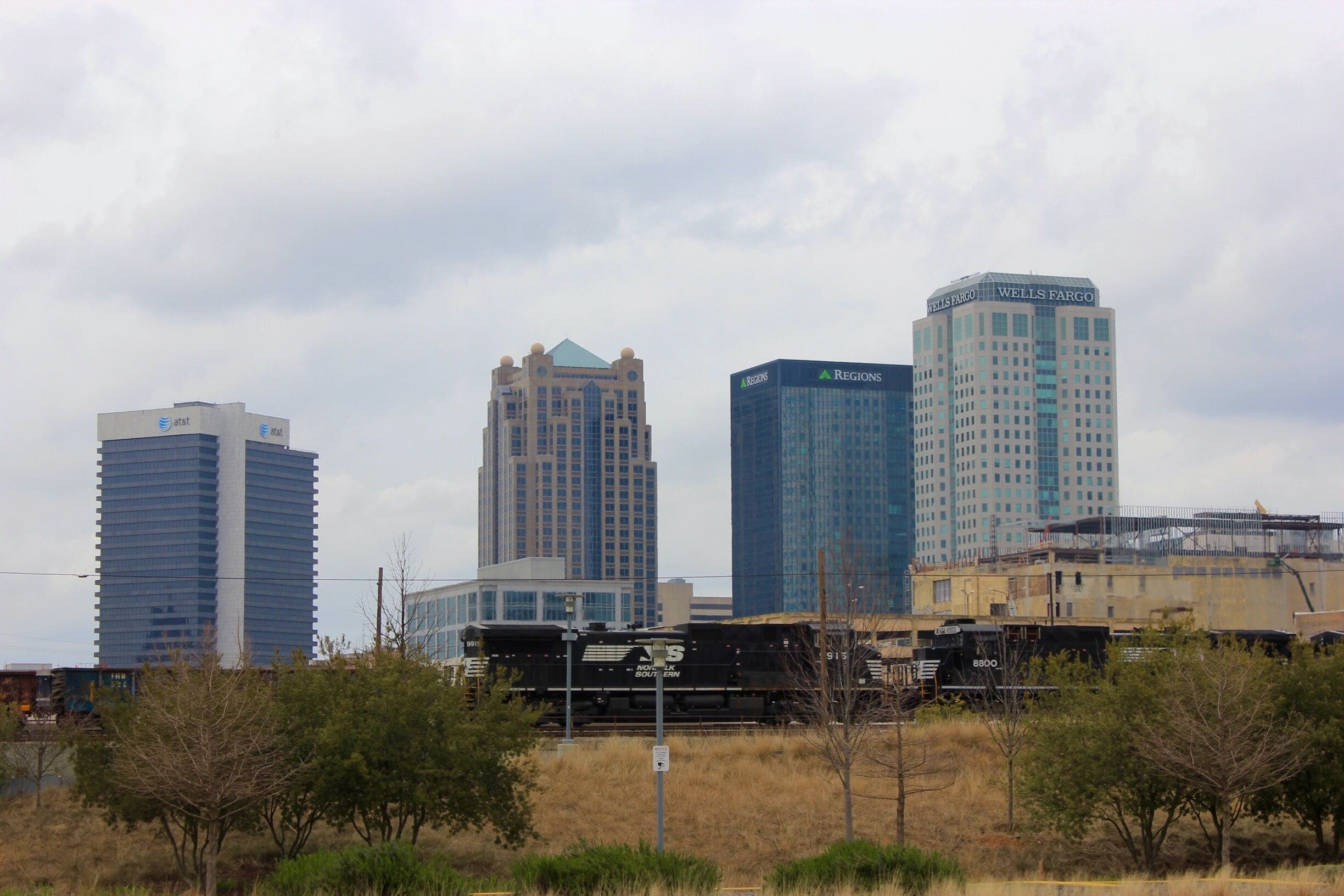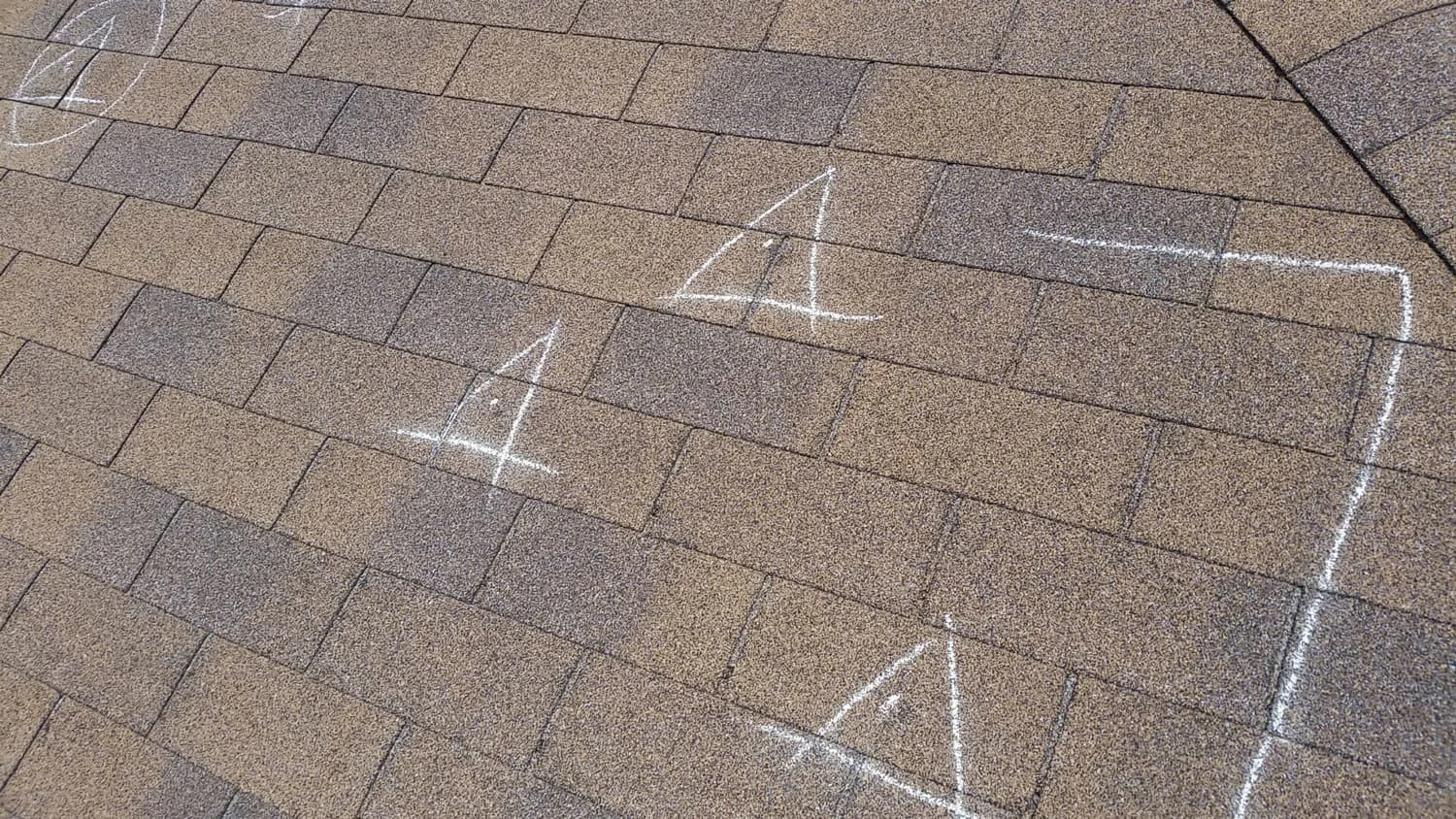
Commercial roof hail damage assessment and repair for Birmingham and Jefferson County - infrared documentation, insurance claim support, and membrane and insulation repair scoped to restore warranty compliance. The work is planned around roof access, active building use, drainage, membrane condition, and the owner's timeline for repair, maintenance, or capital work.
Hail Damage by Membrane Type
TPO and EPDM single-ply: The membrane itself is elastic enough to absorb most hail impacts without puncture. The damage is primarily to the insulation below. Standard-density polyiso compresses on impact from stones above 1.25 inches; HD polyiso and HD gypsum cover board are significantly more resistant. Buildings we have installed or re-roofed with HD cover board consistently show less insulation damage in post-storm infrared scans than buildings with standard-density polyiso.
Modified bitumen: Granule loss is the primary surface indicator. Moderate hail strips the protective granule layer from modified bitumen, exposing the underlying mat to direct UV. The mat degrades rapidly once the granules are gone — a modified bitumen roof that loses its granule layer to hail has lost several years of effective service life even if no puncture is visible. We document granule loss by zone and give the property owner a remaining-life estimate based on mat exposure percentage.
Metal roofing panels (common on Birmingham industrial buildings): Dents from hail above 1 inch are visible and documentable. Structural integrity is rarely affected, but the dent pattern is a documented insurable event and the dent density map we produce is appropriate supporting documentation for a claim.
Insurance Claim Support for Birmingham Hail Events
We are not a public adjuster. We do not negotiate claims or take a percentage of claim settlements. What we do is produce the roofing contractor documentation that supports your claim: the pre-repair condition survey, the infrared scan and core-pull results, the repair scope with line-item pricing, and the post-repair completion documentation. That package goes to your adjuster and your attorney if the claim is disputed.
Timing matters. The best infrared scan data comes from the evening of the storm or within 48 hours — before rain events wash away surface evidence and before the thermal differential between wet and compressed insulation equalizes. We respond to Jefferson County hail events within 24 to 48 hours to assess buildings on our inspection and maintenance routes, and we take new calls on a first-available basis during storm seasons.
We have produced hail-damage documentation packages for Birmingham commercial property owners disputing claim denials from major carriers active in Alabama. The documentation has held up. We know what the adjusters are looking for and what format the documentation needs to be in.
Frequently asked questions
How soon after a hail storm should I have my Birmingham commercial roof inspected?
Within 48 hours if possible — ideally the evening of the storm. Infrared scanning is most accurate when the insulation compression from hail impact is still creating a detectable thermal differential. After 72 to 96 hours, the differential equalizes and some damage zones become harder to detect without core pulls. Surface evidence — granule loss on modified bitumen, surface scuffing on TPO — is visible immediately and does not have a time-sensitivity issue.
What hail stone size causes damage to a commercial flat roof?
On standard-density polyiso insulation under single-ply: meaningful compression begins at 1.25 inches. On modified bitumen: granule loss is measurable at 0.75 inches, significant at 1 inch. On HD polyiso or HD gypsum cover board, the threshold shifts up by roughly 0.5 inches. Jefferson County documented events in recent years have produced stones in the 1.5 to 2.5 inch range — above the damage threshold for every standard insulation specification.
Can you repair hail-damaged roof sections without replacing the whole roof?
Yes. When damage is concentrated in identifiable zones — which is typical for moderate Jefferson County hail events — we replace the insulation and membrane in the damaged zones and transition into the undamaged field. The transition detail is critical: we use a manufacturer-approved overlap and seal at every zone boundary to maintain the full system warranty on the repaired sections. We do not cut corners on the transition detail because it is the most likely point of future failure if it is not done correctly.
Do you work with insurance adjusters directly on Birmingham commercial claims?
Yes. We will meet the adjuster on the roof during their inspection visit, walk them through our damage documentation, and provide a repair scope with line-item pricing in the format their estimate system uses. We have worked with the major commercial property insurance adjusters active in Jefferson County and know how to present damage documentation that moves a claim forward.