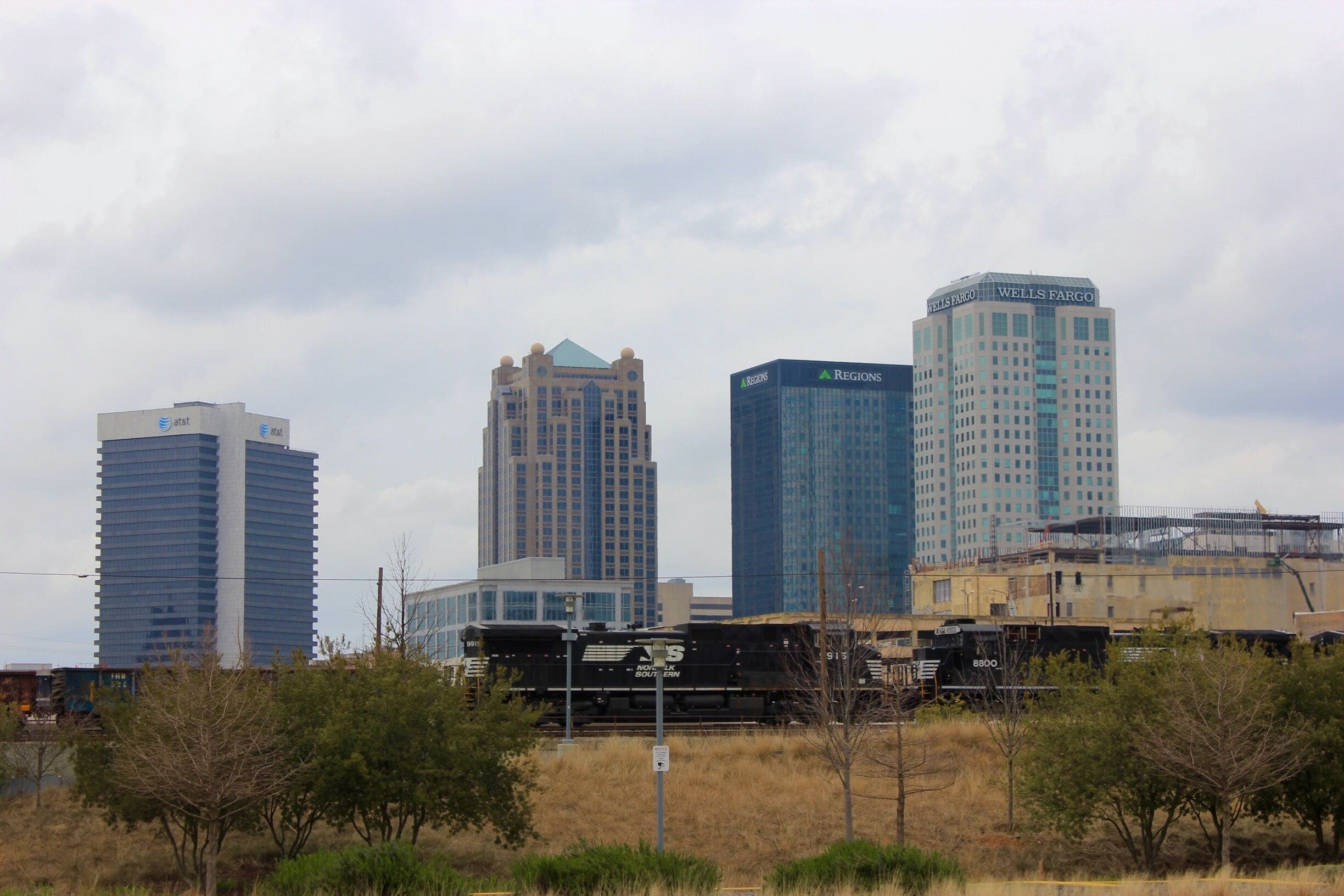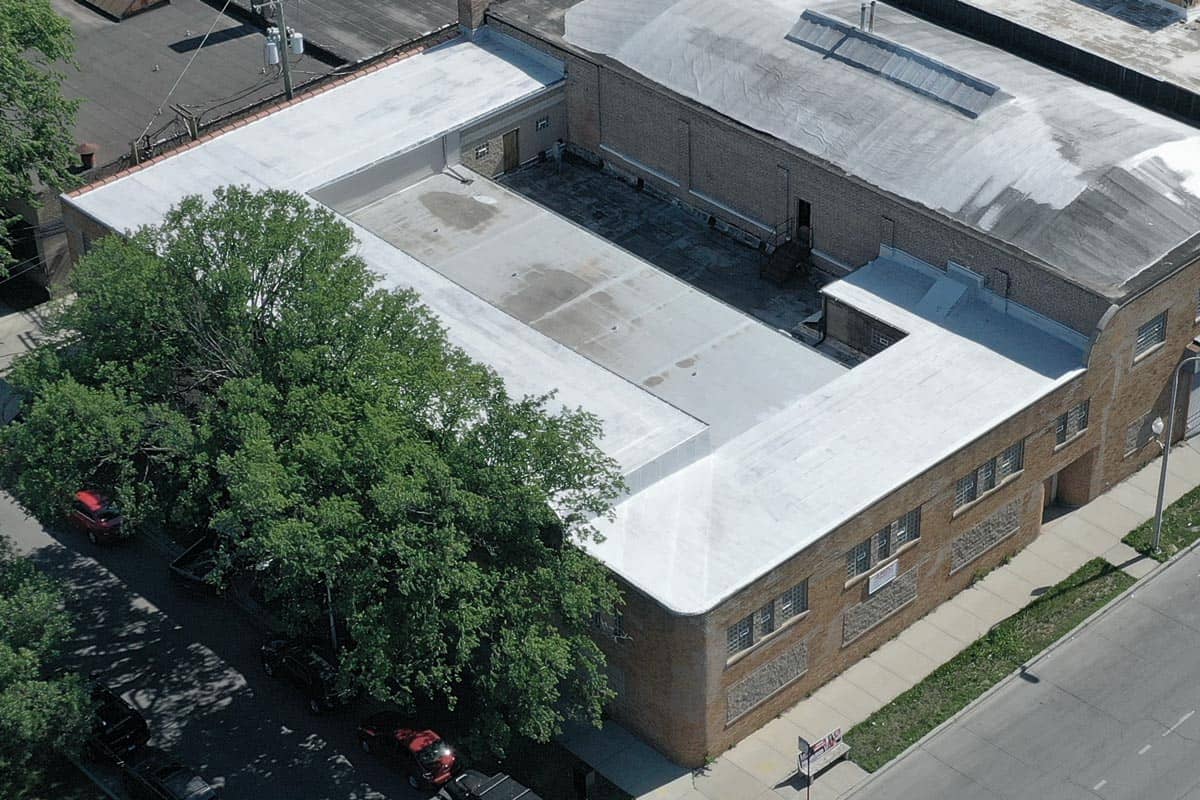
Modified bitumen commercial roofing for Birmingham and Jefferson County buildings - SBS and APP torch-applied, cold-applied, and hot-mopped modified bitumen systems for flat and low-slope commercial roofs. The work is planned around roof access, active building use, drainage, membrane condition, and the owner's timeline for repair, maintenance, or capital work.
SBS vs. APP — Which Modified Bitumen System Is Right for Birmingham
SBS (styrene-butadiene-styrene) modified bitumen: The rubber-modified asphalt that remains flexible at low temperatures. Best performance in Birmingham's freeze-thaw cycles — SBS cap sheet does not crack at parapets and penetrations during winter ice events the way that APP-modified or unmodified asphaltic systems can. Installed by cold adhesive, hot mopping, or heat welding depending on the manufacturer's system. 10 to 20-year manufacturer warranties available.
APP (atactic polypropylene) modified bitumen: The plastic-modified asphalt that provides superior UV resistance and surface hardness. Typically torch-applied — the propane torch melts the underside of the APP cap sheet as it unrolls, bonding it to the substrate or base sheet with a monolithic asphalt bond. APP torch-applied systems perform well in Birmingham's hot, UV-intense summers. Less flexible at low temperatures than SBS, which means flashings on APP systems need more attention in winter freeze events. 15 to 20-year manufacturer warranties available.
For Birmingham buildings, we typically specify SBS for buildings in exposed locations where winter temperature swings are pronounced — mountain-facing elevations in Mountain Brook and Vestavia Hills, open-exposure roofs on taller buildings in the downtown corridor. APP is appropriate for sheltered roofs with good drainage and for recover applications over existing asphaltic substrates where the torch-applied bond provides the most reliable adhesion.
Modified Bitumen Repair — What Fails and How We Fix It
Seam and lap failure: Modified bitumen laps are the most common failure point on aging Birmingham commercial roofs. The asphaltic adhesive at the lap edge oxidizes with age and loses adhesion, allowing the lap to lift and admit wind-driven water. We heat-weld or adhesive-rebond open laps and seal the edge with asphaltic mastic and granule embedment. We then probe-test the repaired laps under water to confirm the seal.
Blister repair: Blisters form when trapped moisture vapor between membrane plies expands under solar heating. Small blisters are often cosmetic and stable. Blisters that are growing, soft, or in locations where foot traffic could rupture them are cut open, allowed to dry, the void is filled with compatible asphalt mastic, and the area is patched with a compatible cap sheet.
Flashing failure at parapets and penetrations: Asphaltic flashings at parapet walls oxidize and crack with age and freeze-thaw cycling. We remove failed flashing, prepare the substrate, and re-flash with compatible modified bitumen base and cap sheet — torch-applied or cold-applied depending on the existing system — to manufacturer specification. Birmingham's winter ice events make parapet flashing integrity the most critical maintenance item on any older modified bitumen roof.
When Modified Bitumen Should Be Recovered vs. Replaced
Recover is appropriate when: the existing modified bitumen substrate is structurally sound, moisture cores confirm less than 25% of sampled areas are wet, the existing roof's insulation R-value meets current Alabama energy code, and the deck below is sound. A single-ply recover over a verified-dry modified bitumen substrate is a well-established and manufacturer-warranted system that can extend the asset life 15 to 20 years at significantly lower capital cost than full tear-off.
Replacement is appropriate when: moisture cores show widespread saturation above 25%, the existing insulation R-value is below current Alabama energy code minimum and cannot be corrected by adding a cover board, the deck shows corrosion or structural deterioration, or the roof has had multiple repairs that have compromised its geometry and drainage. The April 2011 tornado superoutbreak and subsequent major storm events have accelerated the replacement cycle on Jefferson County commercial buildings that sustained structural movement — if the building moved, the old roof's drainage geometry may no longer perform correctly.
We document the recover-versus-replace decision with written core-pull results and a condition assessment. We do not recommend replacement to increase revenue on buildings where recover is the correct scope.
Frequently asked questions
How long does a modified bitumen roof last in Birmingham?
Well-maintained SBS or APP modified bitumen systems perform 20 to 30 years in Alabama conditions. The key variable is maintenance — drain clearing, seam re-sealing, and flashing repair before failures become active leaks. Birmingham's commercial inventory has many modified bitumen roofs installed in the late 1980s and 1990s that are at or past 30 years and still performing with maintenance. There are also roofs from the same era that failed at 15 years because they were never maintained. The asset is the maintenance history.
Can modified bitumen be repaired after hail damage?
Yes. Hail damage on modified bitumen typically presents as granule loss and surface bruising on APP cap sheet, or as small splits in the cap sheet membrane from direct impact. Granule loss accelerates UV degradation — damaged areas should be documented and either spot-coated with asphaltic sealant or patched with compatible cap sheet. Large-area hail damage that removes granule coverage across significant sections of the roof may warrant a full fluid-applied coating system over the existing membrane rather than spot repairs.
Is torch-applied modified bitumen safe in occupied buildings?
Torch-applied modified bitumen requires a hot-work permit from most building owners and municipalities, including the City of Birmingham. The torch-applied process creates open flame on the roof surface and must be conducted by trained personnel following established fire safety protocols — fire watch during and after torching, clearance from combustible materials, building coordination for smoke and odor. We follow all required hot-work protocols and obtain required permits. Cold-applied SBS systems avoid the open-flame requirement entirely and are the appropriate choice for buildings where hot-work permits are not available.
Do you replace old built-up roofing (BUR) systems?
Yes. Built-up roofing — the original multi-ply hot-mopped asphaltic systems that predate modified bitumen — is common on Birmingham's older commercial and industrial inventory, particularly downtown buildings from the 1960s and 1970s and older Avondale industrial structures. We remove BUR systems and replace with current-generation single-ply or modified bitumen systems. BUR removal requires specific equipment and disposal procedures for the asphaltic waste — we handle the disposal in compliance with current Alabama environmental standards.