Commercial roof recover installation for Birmingham buildings - TPO, EPDM, and modified bitumen recover systems over sound existing roofs, with moisture core qualification and new manufacturer warranty. The work is planned around roof access, active building use, drainage, membrane condition, and the owner's timeline for repair, maintenance, or capital work.
Substrate Qualification for Recover
Moisture core testing is the primary qualification step. We pull cores in a five-to-ten-location grid for roofs under 20,000 square feet, adding one core per additional 5,000 square feet on larger roofs. Each core is cut through the existing membrane and insulation layers to the deck, and the insulation is examined for moisture content — visually and by feel, supplemented by moisture meter readings on suspect samples. If fewer than 25 percent of cores show any insulation moisture, a recover is on the table. If more than 25 percent show wet insulation, full tear-off is the correct scope and we say so.
Deck condition is the second qualification step. Where moisture cores show wet insulation, we pull a deck inspection port to assess deck condition below the wet insulation. Corroded steel deck, delaminated structural plywood, or deteriorated concrete fill under the membrane are disqualifying conditions for a recover — they require deck repair or replacement before any new system goes on, which puts the project in the full-replacement cost band regardless of the recover intent.
Existing membrane compatibility matters for the recover attachment method. Mechanically attached TPO recover over existing modified bitumen requires the fastener to penetrate through the existing system to the deck — we verify deck fastener pull-out strength meets the wind-uplift requirement for the new system before finalizing the recover specification. Fully adhered recover systems require a compatible adhesive for the new membrane-to-existing-membrane bond, which varies by substrate and manufacturer. We specify the attachment method after substrate qualification, not before.
What a Recover Scope Includes
Substrate preparation: removal of all existing aggregate from aggregate-surfaced BUR systems; cleaning and priming of smooth existing membrane surfaces; targeted tearout and replacement of all wet insulation identified in core testing; repair of all failed flashings at parapets, penetrations, and drains before the new membrane goes on. The recover membrane does not get installed until every identified substrate deficiency is corrected.
Insulation overlay: most recover scopes include a new insulation layer over the existing membrane — typically a 1-inch to 2-inch HD polyiso cover board, which adds R-value, provides a smooth nailable surface for the new membrane fastener pattern, and improves impact resistance. For Jefferson County buildings in hail exposure zones, we specify HD polyiso or HD gypsum cover board at the minimum, not standard-density polyiso, because the impact resistance difference matters for insurance documentation.
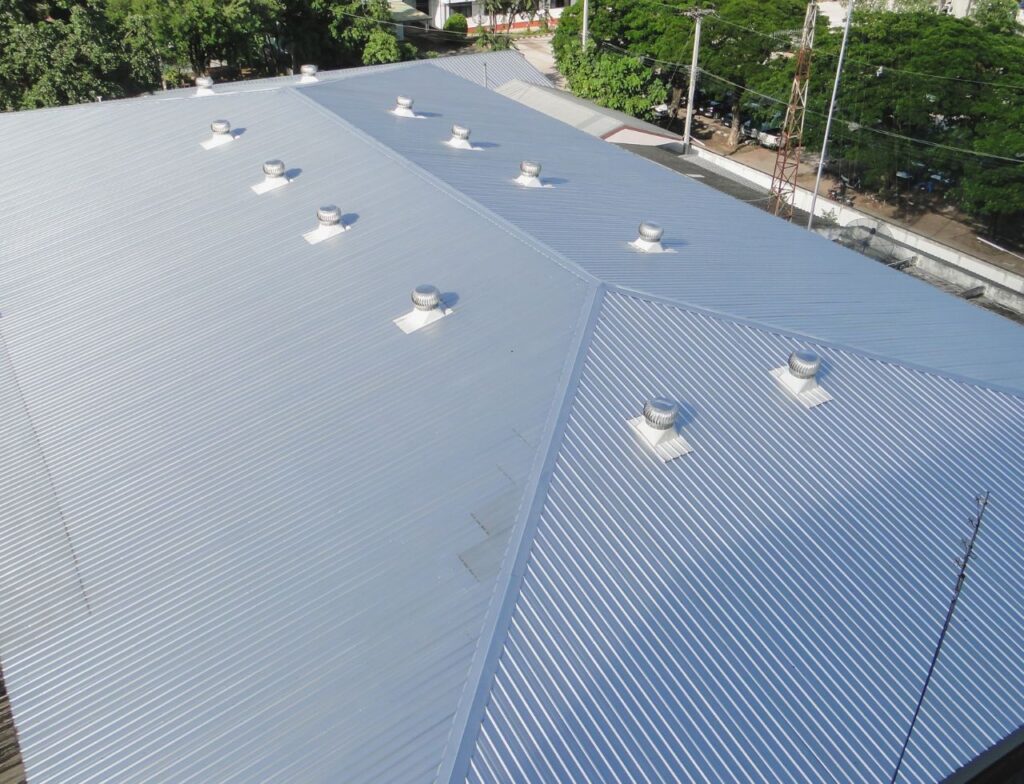
New membrane installation: TPO mechanically attached or fully adhered per the manufacturer's recover system specification; EPDM mechanically attached or ballasted; modified bitumen cap sheet torch-applied or self-adhered over the existing base ply. Every recover membrane installation is detailed to the full manufacturer's spec for the recover configuration — not the standard new-installation spec, which differs in fastener pattern, insulation requirements, and flashing details.
Manufacturer warranty: recover systems carry a full manufacturer warranty — 20-year NDL for TPO and EPDM from Carlisle, Johns Manville, Sika Sarnafil, and GAF — provided the installation passes the manufacturer's pre- and post-installation inspection. We coordinate the manufacturer inspection as standard process, not as an add-on. The warranty document at closeout is the primary deliverable on every recover project.
When Recover Saves Capital vs. When Replacement Is the Right Call
Recover makes financial sense when the substrate is sound, the building's capital horizon extends at least 15 years, and the building does not have structural concerns that make full deck access necessary. For a 30,000 sq ft Hoover retail building with a 1995-vintage modified bitumen roof running dry insulation under moisture core testing, a recover with new 60-mil TPO and a 20-year warranty closes the capital question for another generation of ownership without the disruption and cost of full tear-off.
Replacement is the honest scope when moisture cores show wet insulation, when deck inspection reveals structural deterioration, or when the existing roof has been repaired so many times that the substrate condition is inconsistent and the recover warranty would be at risk of failing pre-qualification inspection. We produce a written recover-vs-replace comparison for every building where the decision is not clear on core testing alone — cost differential, projected service life, warranty path, and the specific substrate conditions that drove the recommendation. That document is what the building owner needs to defend the capital decision to an ownership group or asset manager.
Frequently asked questions
How much less does a recover cost compared to full replacement in Birmingham?
Typically 40 to 55 percent less on a per-square basis, depending on substrate preparation requirements, insulation overlay thickness, and the new membrane specification. The largest variable is substrate prep — a recover where the existing aggregate BUR requires complete aggregate removal before the new membrane can attach costs more to prepare than a smooth-surface EPDM recover. We produce a detailed itemized scope so the owner can see exactly where the cost difference lives.
Will a Birmingham recover project qualify for a 20-year NDL manufacturer warranty?
Yes, if the substrate qualifies and the installation passes manufacturer inspection. Recover systems from Carlisle, Johns Manville, Sika Sarnafil, and GAF all carry 20-year NDL warranty options when installed to the manufacturer's recover system specification. The warranty requires the same annual maintenance obligation as a new installation — we deliver the maintenance contract at closeout to keep the warranty active.
How does Birmingham's spring hail season affect recover decisions?
Spring hail is a reason to specify HD cover board on any recover project in Jefferson County — the additional density significantly improves impact resistance versus standard-density polyiso. It does not change the recover-vs-replace decision, which is driven by substrate condition. If the existing roof has hail damage that has allowed water intrusion into the insulation, that intrusion shows up in moisture core testing and drives the scope accordingly.
Do you handle the permits for a Birmingham recover project?
Yes. Recover projects in Birmingham, Hoover, Mountain Brook, Vestavia Hills, Homewood, and all Jefferson County municipalities require a building permit before work begins. We pull the permit, provide the required documentation to the jurisdiction's building inspector, and coordinate the inspection schedule as part of standard project management. No Birmingham commercial roof work proceeds without a permit under our management.